When is the best time to visit the Canary Islands? It depends on what you want: September and October for the sea (23–24 °C, the warmest water of the year), November to March for winter sun in the south of Tenerife and Gran Canaria or on Lanzarote and Fuerteventura, with afternoons of 21–25 °C, and May for walking, the month with the fewest arrivals and almost no rain. Summer is the hottest season but not the high season: the busiest month is March.
And there is no single "Canary Islands weather". In January, Tenerife South airport averages a high of 21.7 °C and fewer than 2 days of rain; Tenerife North airport, at 632 m, 16 °C and almost 8 days of rain; Izaña, at 2,369 m on Teide, 7.5 °C, with snow possible. One island, three climates.
How the Canary Islands climate works
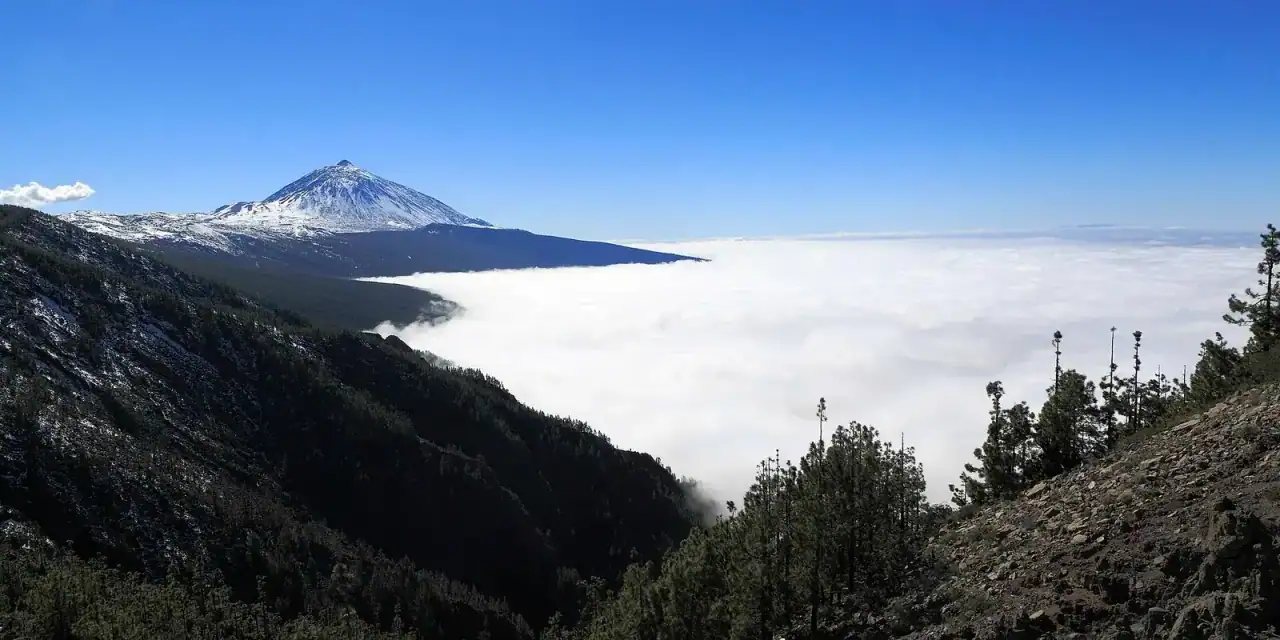
Trade winds and the sea of clouds
The Azores High is in charge. In summer it sits further north and drives the trade wind, a north-easterly that blows on 70 % of days in July (45 % in January). In winter it drops south and lets Atlantic low-pressure systems through: that is why the rain falls mostly between November and January.
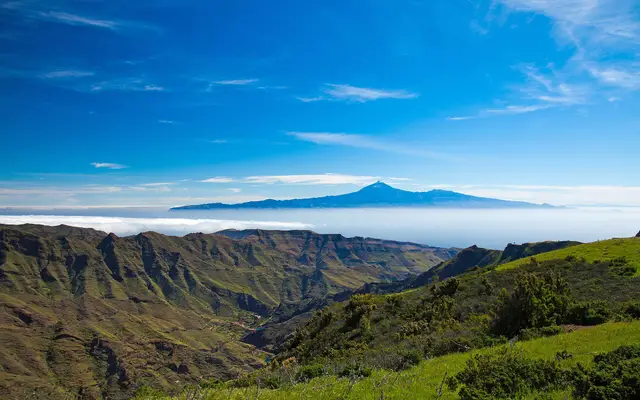
A temperature inversion acts as a lid between 700 and 1,500 m. Beneath it a layer of cloud builds up and, when it meets the mountains, forms the sea of clouds. From April to September that lid is in place on more than 90 % of days, which is why summer is so settled.
North and south
On the high islands, the northern slopes face straight into the trade wind: more cloud, more rain, more green. The south is sheltered, dry and sunny. Annual rainfall ranges from more than 1,000 mm on the peaks of La Palma to less than 100 mm on the southern coasts of Tenerife and Gran Canaria.
Northern cloud is mainly a summer thing: in Las Palmas de Gran Canaria cloud frequency reaches 97 % in June and July, against 54 % in November and December. Locals call it the "panza de burro", the donkey's belly.
Lanzarote and Fuerteventura
They are too low for the cloud layer to catch them. Fuerteventura is the driest island (98 mm a year) and Lanzarote the sunniest at the coast (2,986 hours of sunshine a year). The trade-off: in summer they take the full force of the trade wind, and in winter they have the coolest nights on the coast.
Altitude
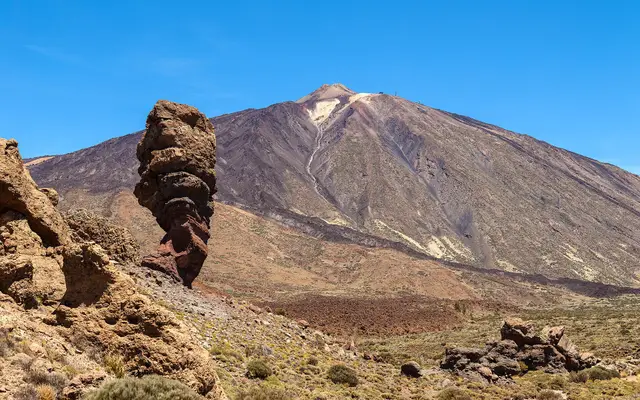
At Izaña the January average is 7.5 °C by day and 1.1 °C at night, with 2.4 days of snow; from June to September it does not snow. Above the clouds the sun rules: more than 12 hours a day on average in June and July. That is why the observatories on Teide and the Roque de los Muchachos are up there.
Calima and storms
An east or south-east wind brings dust from the Sahara: a yellowish sky, poor visibility and a jump in temperature. Severe episodes add up to about 24 days a year and the longest come in January and February; in February 2020 one forced all eight Canary Islands airports to close. In summer the Saharan air hits the peaks harder than the beach.
Tropical storms are very rare, but they happen: Delta (November 2005) and Hermine (September 2022) arrived between late September and November.
Canary Islands temperature by month, island by island
AEMET climate normals and average sea temperature; switch between measures with the buttons. La Gomera is blank because AEMET does not publish normals for its stations.
| Jan | Feb | Mar | Apr | May | Jun | Jul | Aug | Sep | Oct | Nov | Dec | |
|---|---|---|---|---|---|---|---|---|---|---|---|---|
| Tenerife | 22 | 22 | 23 | 23 | 24 | 25 | 28 | 28 | 28 | 27 | 25 | 23 |
| Gran Canaria | 21 | 21 | 22 | 23 | 24 | 25 | 27 | 28 | 27 | 26 | 24 | 22 |
| Lanzarote | 21 | 21 | 23 | 24 | 25 | 26 | 28 | 29 | 29 | 27 | 24 | 22 |
| Fuerteventura | 21 | 21 | 22 | 23 | 24 | 26 | 27 | 28 | 28 | 26 | 24 | 22 |
| La Palma | 21 | 21 | 21 | 22 | 23 | 24 | 26 | 26 | 27 | 26 | 24 | 22 |
| La Gomera | — | — | — | — | — | — | — | — | — | — | — | — |
| El Hierro | 21 | 21 | 21 | 22 | 23 | 24 | 25 | 26 | 27 | 26 | 24 | 22 |
Source: AEMET, climate normals (1981–2010) · sea temperature: seatemperature.info, ten-year average
Canary Islands weather month by month: at a glance
Tenerife South airport (the reference for Costa Adeje and Los Cristianos) and the sea at Los Cristianos.
| Month | High / low | Sea | In one line |
|---|---|---|---|
| January | 21.7 / 15.2 °C | 20.1 °C | Winter sun in the south and east; snow possible on Teide |
| February | 22.0 / 15.0 °C | 19.4 °C | Carnival and almond blossom; cold sea and calima |
| March | 23.1 / 15.6 °C | 19.2 °C | The busiest month and the coldest water |
| April | 23.1 / 16.0 °C | 19.6 °C | Settled weather returns; barely any rain in the south and east |
| May | 23.9 / 17.0 °C | 20.4 °C | The quietest month and the best for walking |
| June | 25.4 / 18.8 °C | 21.5 °C | Longer days; cloud in the north, sun in the south |
| July | 27.7 / 20.2 °C | 22.2 °C | Strong trade wind: windy in the east, calm in the south |
| August | 28.4 / 21.1 °C | 23.1 °C | The hottest month; heatwaves possible |
| September | 27.9 / 21.1 °C | 23.8 °C | The warmest sea and fewer people than in summer |
| October | 26.8 / 20.0 °C | 23.7 °C | Sea still at its peak; high season begins |
| November | 24.8 / 18.2 °C | 22.6 °C | Rain in the west; the east and south are the driest bet |
| December | 22.8 / 16.5 °C | 21.2 °C | The wettest month, though only 3–4 days in the south |
Best time to visit the Canary Islands for what you want to do
| Jan | Feb | Mar | Apr | May | Jun | Jul | Aug | Sep | Oct | Nov | Dec | |
|---|---|---|---|---|---|---|---|---|---|---|---|---|
| Swimming (warmest sea) | unlikely | unlikely | unlikely | unlikely | likely | likely | likely | ideal | ideal | ideal | likely | likely |
| Hiking | likely | likely | ideal | ideal | ideal | likely | unlikely | unlikely | unlikely | likely | likely | likely |
| Whales and dolphins (most species) | likely | likely | likely | likely | ideal | ideal | likely | likely | likely | likely | likely | likely |
| Surfing (swell) | ideal | ideal | ideal | unlikely | unlikely | unlikely | unlikely | unlikely | likely | ideal | ideal | ideal |
| Windsurfing and kitesurfing | unlikely | unlikely | unlikely | unlikely | unlikely | likely | ideal | ideal | unlikely | unlikely | unlikely | unlikely |
| Fewer crowds | unlikely | unlikely | no | likely | ideal | ideal | unlikely | unlikely | likely | unlikely | unlikely | unlikely |
unlikelylikelyideal
- Beach: September and October, with the sea at 23–24 °C.
- Winter sun: from November to February, south Tenerife for the warmest afternoons, Fuerteventura and Lanzarote for the lowest chance of rain. Compare them in which island to choose.
- Hiking: May is the all-round winner, dry and not too hot; March and April are green after the rains. In summer, set off early: fire alerts close trails. See hiking.
- Whales and dolphins: all year, with resident pilot whales and bottlenose dolphins off south-west Tenerife; more species "especially in May and June". See whale and dolphin watching.
- Stars: the core of the Milky Way is visible from April to October, best from May to August. See stargazing.
- Surfing: October to March, with northerly swell at Famara, La Santa or El Cotillo; in summer, small waves for learning. See surfing in Fuerteventura.
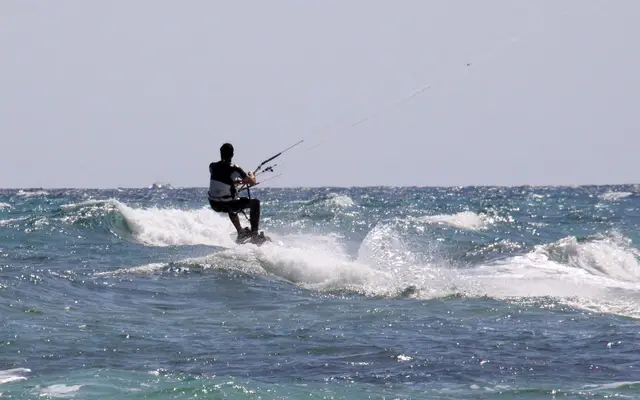
- Windsurfing and kitesurfing: July and August, when the world cups come to Pozo Izquierdo, Sotavento and El Médano.
Daylight hours: sunrise and sunset by month
Even in December you get at least 10 h 22 min of daylight; in June it is over 13 h 50 min and the sun sets around 21:00 (the Canaries are an hour behind mainland Spain, on the same time as the UK).
| Month | Sunrise | Sunset | Daylight hours |
|---|---|---|---|
| January | 07:57 | 18:29 | 10 h 32 min |
| February | 07:42 | 18:54 | 11 h 12 min |
| March | 07:14 | 19:12 | 11 h 58 min |
| April | 07:39 | 20:29 | 12 h 50 min |
| May | 07:14 | 20:47 | 13 h 33 min |
| June | 07:06 | 21:02 | 13 h 56 min |
| July | 07:16 | 21:03 | 13 h 46 min |
| August | 07:33 | 20:43 | 13 h 10 min |
| September | 07:48 | 20:09 | 12 h 20 min |
| October | 08:04 | 19:35 | 11 h 31 min |
| November | 07:25 | 18:11 | 10 h 45 min |
| December | 07:48 | 18:09 | 10 h 22 min |
Canary Islands local time (one hour behind mainland Spain), calculated for the centre of the archipelago in the middle of each month.
Which island for which time of year
The rule of thumb: for sun, go south and east; for greenery and mild temperatures, north and west. In summer the trade wind blows on the north and east, and the north clouds over; in winter the west gets more rain.
Outlines: © OpenStreetMap contributors
Canary Islands weather myths
- "The sea is warm thanks to the Gulf Stream." The opposite: the islands are washed by a cold current that cools the air.
- "22 °C all year round." The annual average at the coastal airports ranges from 20.7 to 21.5 °C, with extremes of 1 °C at night at Izaña in January and 29.1 °C in Lanzarote in August.
- "The water is warmest in August." It is warmest in September and October. Even in November the sea off south Tenerife (22.6 °C) is warmer than in July (22.2 °C).
- "More than 3,000 hours of sunshine." Only at Izaña. On the coast, from 2,106 hours (La Palma) to 2,986 (Lanzarote).
- "It never rains." In December 26–31 mm falls on the driest coasts, sometimes almost all of it in one day.
- "The best climate in the world, scientifically proven." It comes from a single ranking for travellers published in 1996 (Pleasant Weather Ratings). It is a slogan, not a fact.
What to do on cloudy or calima days
When the north is under cloud, the answer is to go up: the Teide cable car climbs to 3,555 m, well above the sea of clouds, although it closes in wind, snow or ice. The tour with the cable car costs €92 both on the Volcano Teide website and on the booking platforms.
| Where | Ticket | Rating | Price | Where to book |
|---|---|---|---|---|
| GetYourGuide | Tenerife: Mount Teide Tour with Cable Car Ticket & Transfer | 4.3 (6,095) | €92 | View on GetYourGuide |
| Tiqets | Mount Teide: Tour with Cable Car | 4.2 (48) | €92 | View on Tiqets |
| Official website | Volcano Teide, tour with cable car and transfer | — | €92 | Official site ↗ |
Adult prices checked on 2 October 2026. They may vary by date; each site confirms the final price.
For a windy day, Siam Park keeps its water at about 24 °C all year; a ticket costs €44 on its website, on GetYourGuide and on Tiqets. Which parks open in winter: see water parks.
| Where | Ticket | Rating | Price | Where to book |
|---|---|---|---|---|
| GetYourGuide | Siam Park Entry Tickets | 4.5 (18,886) | €44 | View on GetYourGuide |
| Tiqets | Siam Park: Entry Ticket | 4.5 (3,687) | €44 | View on Tiqets |
| Official website | Siam Park official online shop | — | €44 | Official site ↗ |
Adult prices checked on 2 October 2026. They may vary by date; each site confirms the final price.
Canary Islands weather FAQs
What is the hottest month in the Canary Islands?
August: an average high of 28.4 °C at Tenerife South and 29.1 °C in Lanzarote. With Saharan air, Gran Canaria has gone above 40 °C.
What is the coldest month in the Canary Islands?
January and February: highs of 20.6–22 °C on the coast and 14–16.6 °C at night. At Izaña, a low of 1.1 °C in January.
When does it rain most in the Canary Islands?
In December, at every coastal station. In the south and east that means three or four days of rain; on La Palma, about eight.
When is the sea warmest in the Canary Islands?
In September and October, between 23 and 24 °C. It is coldest in February and March: 18.3 °C around Lanzarote and Fuerteventura.
Which Canary Island has the best weather in winter?
For warm afternoons, south Tenerife; for the least rain, Fuerteventura and Lanzarote. La Palma and El Hierro have milder nights but more cloud.
Figures: AEMET standard climate values (1981–2010), satellite sea-surface temperature and ISTAC tourist arrival figures.