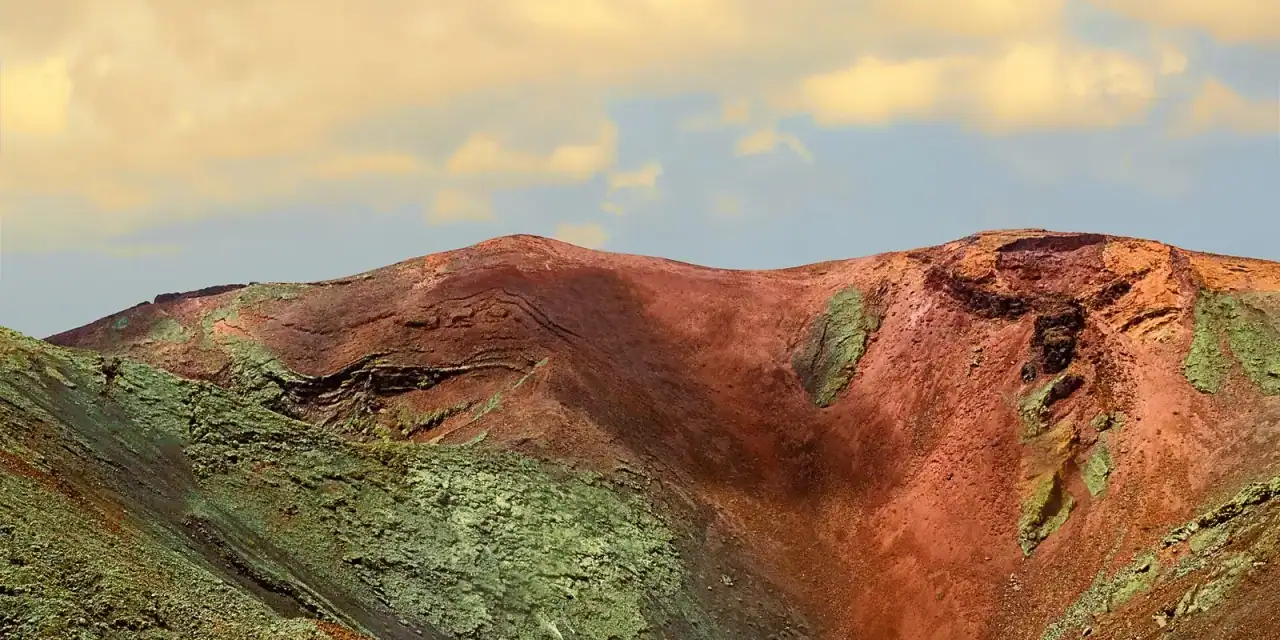
You visit the Canary Islands volcanoes in three very different ways. On Tenerife you ride the cable car up Teide to 3,555 m; on Lanzarote you sit on a coach along the Ruta de los Volcanes in Timanfaya, the landscape left by the archipelago's biggest historic eruption; on La Palma you walk with a guide across the ash beside Tajogaite, the volcano born in 2021.
If you can only pick one, our recommendation depends on what you are after. For pure volcanic scenery with no effort, Timanfaya. For altitude and hiking, Teide. To understand a recent eruption and what it swept away, Tajogaite. Gran Canaria and Fuerteventura have had no historic eruptions, but they have calderas you can explore on foot.
Which volcano to visit on each island
Teide, Chinyero, Cueva del Viento
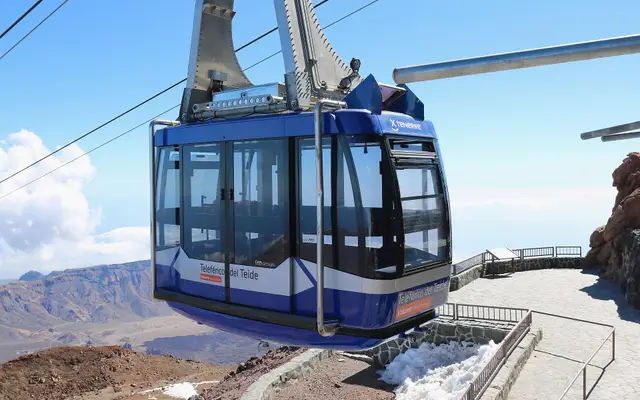
Cable car to 3,555 m (€43), the summit with a Tenerife ON permit and the largest lava tube in Europe.
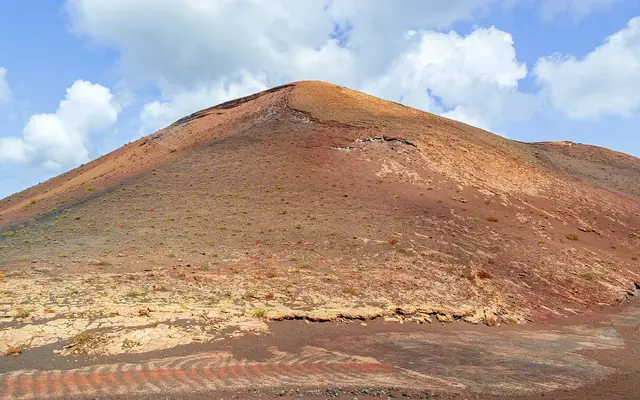
Timanfaya, Cueva de los Verdes, Volcán del Cuervo
The Canaries' biggest historic eruption; coach route with a €30 timed ticket, plus free guided walks.
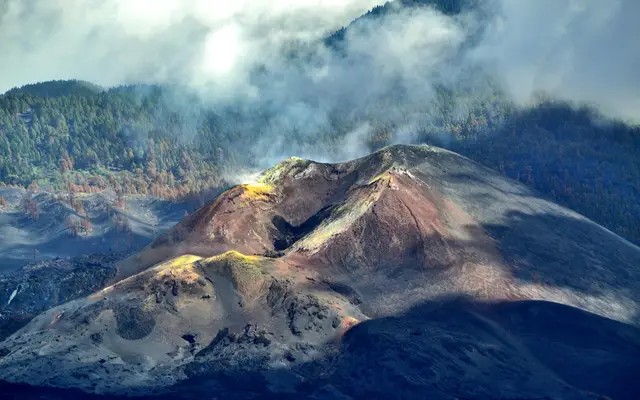
Tajogaite, San Antonio, Caños de Fuego
The youngest volcano: to the cone only with a licensed company (about €30–38); free viewpoints and visitor centres.
Caldera de Bandama
A crater 216 m deep with a path down to the bottom.
Calderón Hondo
An easy crater near Lajares: 5 km and an hour and a half.
Tagoro
Underwater eruption of 2011–2012 off La Restinga; explained at the Geopark centre.
Why the Canary Islands are volcanic, and which volcanoes are active
The islands formed on the African plate, which moves about 12 mm a year over a hotspot in the mantle; the most widely accepted explanation places that plume beneath La Palma and El Hierro today. That is why the islands get older from west to east: the oldest lavas above sea level are 20.2 million years old on Lanzarote and Fuerteventura, 14.6 on Gran Canaria, 11.9 on Tenerife, 9.4 on La Gomera, 1.7 on La Palma and 1.1 on El Hierro.
Are they active? Every main island except La Gomera has had eruptions in the last 11,700 years, although none in that period has been dated on Fuerteventura. La Gomera has gone some 4 million years without a major eruption. The Smithsonian counts 75 eruptions in the Canaries over that interval, 15 since 1490, and Tenerife is the island with the most.
Canary Islands volcano eruptions: the historic list
| Date | Island | Eruption |
|---|---|---|
| 1492 | Tenerife | Boca Cangrejo |
| 1585 | La Palma | Tajuya, Cumbre Vieja |
| 1646 | La Palma | Cumbre Vieja |
| 1677–1678 | La Palma | Cumbre Vieja |
| 1704–1705 | Tenerife | Siete Fuentes, Fasnia and Arafo |
| 1706 | Tenerife | Garachico: lava filled in the harbour |
| 1712 | La Palma | Cumbre Vieja |
| 1730–1736 | Lanzarote | Timanfaya, the biggest of all |
| 1798 | Tenerife | Chahorra, on the slopes of Pico Viejo |
| 1824 | Lanzarote | Tao, Tinguatón and Volcán Nuevo |
| 1909 | Tenerife | Chinyero |
| 1949 | La Palma | San Juan |
| 1971 | La Palma | Teneguía |
| 2011–2012 | El Hierro | Tagoro, underwater |
| 2021 | La Palma | Tajogaite, 85 days |
The most recent eruption on land was Tajogaite, from 19 September to 13 December 2021: the longest on record on La Palma, with 1,219 ha covered by lava, some 7,000 people evacuated, 2,988 buildings destroyed and around 48 ha of new land gained from the sea. Cumbre Vieja is the volcanic ridge; Tajogaite is the 2021 cone. They are not two different volcanoes.
Teide (Tenerife): cable car, summit permit and prices
Teide stands 3,715 m high, the official measurement from Spain's national geographic institute (IGN); you will see 3,718 m in many places because that is the old figure. The cable car (Teleférico del Teide) climbs from 2,356 m to La Rambleta (3,555 m) and costs €43 return for a non-resident adult and €21.50 for children aged 3 to 13. Tickets are sold online by time slot at volcanoteide.com. You can stay at the top for an hour, or two if you have a summit permit.
The cable car does not reach the summit. The last 0.66 km (about 55 minutes and 183 m of climb) require a permit for the PNT 10 trail from Tenerife ON, which costs €15 for non-residents of the Canary Islands in the 09:00 to 17:00 slots. Booking opens 56 days ahead, every Monday at 07:00 Canary Islands time, and is separate from the cable car ticket. Without a permit you have two free viewpoints from the top station: La Fortaleza (about 45 minutes) and Pico Viejo (about 55); with an hour up there, pick one.
To see sunrise from the summit without setting off from the coast in the small hours, the Refugio de Altavista mountain hut (3,260 m), reopened after refurbishment, costs €71 a night with the permits included. And there is more volcano beyond the cone: a free 4.85 km trail each way (PR-TF 43.2) leads to Chinyero, which erupted in 1909, and the Cueva del Viento, in Icod de los Vinos, has 18 km mapped: its managers bill it as the largest lava tube in Europe (€25, booking required, at cuevadelviento.net).
The Teide tour with cable car and transfer costs the same on every channel:
| Where | Ticket | Rating | Price | Where to book |
|---|---|---|---|---|
| GetYourGuide | Tenerife: Mount Teide Tour with Cable Car Ticket & Transfer | 4.3 (6,095) | €92 | View on GetYourGuide |
| Tiqets | Mount Teide: Tour with Cable Car | 4.2 (48) | €92 | View on Tiqets |
| Official website | Volcano Teide, tour with cable car and transfer | — | €92 | Official site ↗ |
Adult prices checked on 2 October 2026. They may vary by date; each site confirms the final price.
If you are hiring a car, you do not need the tour: the cable car ticket on its own is €43, although the car park at the base has 220 spaces and the operator asks you to arrive after 13:00. Everything else is in our Teide guide.
Timanfaya (Lanzarote): timed tickets, the coach route and camels
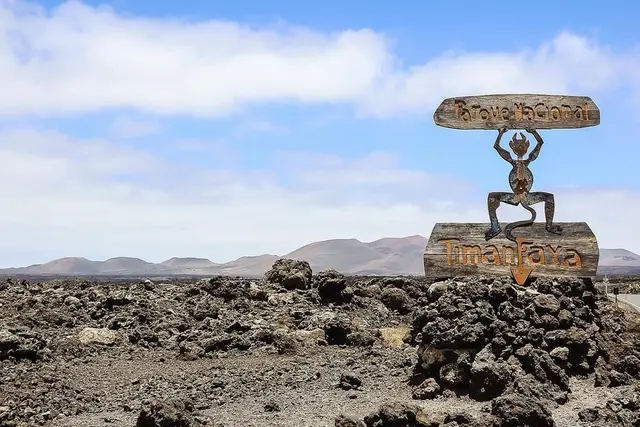
The 1730–1736 eruption opened more than 30 vents along a 14 km fissure and covered some 225 km², a quarter of the island. The Montañas del Fuego centre, at Islote de Hilario, is run by the island council's tourist centres (CACT). Entry costs €30 (€15 for ages 7 to 12, free up to 6) and is sold online only with a set time at cactlanzarote.com: if you arrive late you lose it, with no changes or refunds. It is open every day from 09:30 to 15:45.
It includes the Ruta de los Volcanes, about 35 minutes on a coach with audio in Spanish, English and German, which you do not get off, and the geothermal demonstrations: water that shoots up as steam and brushwood that catches fire from the heat of the ground. El Diablo restaurant grills over a well at about 250 °C and does not take bookings. Best first thing or after 13:30; Sunday is the quietest day.
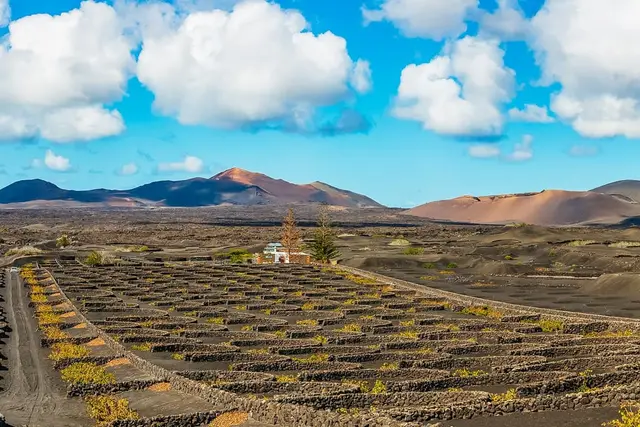
Timanfaya is a seat on a coach, not a walk. To set foot on the lava inside the park there are two free guided walks run by the national park, Tremesana (from Yaiza, over-16s) and the Coastal Route (Ruta del Litoral, from El Golfo), booked at reservasparquesnacionales.es about 25–30 days in advance. Outside the park, Volcán del Cuervo, the first vent of 1730, has an easy path right into the crater, and Caldera Blanca is a hike of about 10 km.
The dromedary rides at the Echadero de los Camellos cost €11 per person, are run by Yaiza town council (not the CACT) and cannot be booked. Some people see them as part of the visit; others prefer not to ride for animal-welfare reasons. Bear in mind too that no public bus goes to the Islote: car, taxi or organised tour. More in Timanfaya and on the César Manrique route.
Tajogaite (La Palma): the youngest volcano, guided visits only
You can only go to the cone with a licensed company. The official trail is a loop of about 6 km taking just over two hours; it starts at Llano del Jable and ends at a safe distance from the crater (trail page on visitlapalma.es). Each company sets its own price: on their websites, about €30–38 (€32 with Astronorte and Senderismo La Palma) and up to €48 with pick-up; on the booking platforms, from €37. Many tours are in Spanish only: ask about the language before you pay.
Paying gets you the walk across the ash, not a climb to the crater rim. You can see the lava flow for free from the viewpoints the island council (Cabildo) marks as safe: the Virgen de Fátima monument in Las Manchas, Tajuya church, the Camino de Los Campitos in Los Llanos and Tazacorte harbour for the lava deltas. The coast road between Tazacorte and Puerto Naos crosses 2.4 km of the 2021 lava.
In Las Manchas, Caños de Fuego explains the lava tubes of the 1949 San Juan eruption (not 2021): €8, or €4 for just the walkways and the glass viewing platform over the Cueva de Las Palomas. Going into that 560 m tube requires a licensed company and a guide: an hour and a half, ages 5 to 75. In the south, the Volcán San Antonio centre (€8) has a half-hour walk around the crater rim, next to the 1971 Teneguía. It is all in the Tajogaite guide.
Lava tubes and calderas you can visit
| Place | Island | What it is | Price |
|---|---|---|---|
| Cueva del Viento | Tenerife | Tube with 18 km mapped; visit by booking | €25 |
| Cueva de los Verdes | Lanzarote | Part of the La Corona tube; 1 km with steps, 50 min, guided | €17, online only, timed |
| Jameos del Agua | Lanzarote | Same tube; with the Casa de los Volcanes museum | €17 (€22.40 with museum) |
| Caños de Fuego | La Palma | Tubes from the 1949 eruption | €8 (€4 walkways) |
| Caldera de Bandama | Gran Canaria | Crater 216 m deep and about 1,100 m across, with a path | free |
| Calderón Hondo | Fuerteventura | 5 km circular trail, viewpoint at 278 m | free |
On Gran Canaria, Bandama is the volcano people visit: you walk down to the floor of the crater, which formed about 5,000 years ago, and combine it with other trips into the interior. On Fuerteventura, Calderón Hondo is the easy volcano, an hour and a half; do not feed the squirrels. Fuerteventura's Cueva del Llano has had its tube closed since 2014, and only the visitor centre is open. La Palma's Caldera de Taburiente is not an explosion crater but a basin formed by collapse and erosion: you visit it as a hiking route, not as a volcano.
- 1Teleférico del TeidesightDirections ↗
- 2Cueva del VientosightDirections ↗
- 3Chinyeronature areaDirections ↗
- 4Montañas del Fuego (Timanfaya)parkDirections ↗
- 5Cueva de los VerdessightDirections ↗
- 6Volcán TajogaitepeakDirections ↗
- 7Caños de FuegosightDirections ↗
- 8Volcán San AntoniopeakDirections ↗
- 9Caldera de Bandamanature areaDirections ↗
- 10Calderón HondopeakDirections ↗
On El Hierro there is nothing to walk on: Tagoro lies under the sea, about 2 km south of La Restinga. The Geopark visitor centre, on the La Restinga road, recreates the underwater eruption. More in the El Hierro guide.
Volcanic alert levels: is it safe to visit the Canary Islands volcanoes?
The alert level is not a fixed fact: the Canary Islands Government sets it through the PEVOLCA plan, with monitoring by Spain's national geographic institute (IGN) and the Canary Islands volcanological institute (Involcan), and reviews it regularly. Check it before you go, not with a travel agent or in this guide.
At the time of writing, Tenerife is on green. For months there have been low-intensity earthquake swarms west of Las Cañadas and south-west of Pico Viejo that residents do not feel. At its latest review, the PEVOLCA scientific committee saw no signs of an eruption "in the coming weeks or months", with ground deformation of about 2 cm in three years; it warns that light tremors may be felt, and it meets every three months.
La Palma was still on yellow in the latest update available, the only island not on green, because of CO₂ in Puerto Naos and La Bombilla. Residents are being allowed back into those neighbourhoods home by home, and about 1,600 sensors measure the gas in real time.
Our picks: volcano tours
Our pick
1
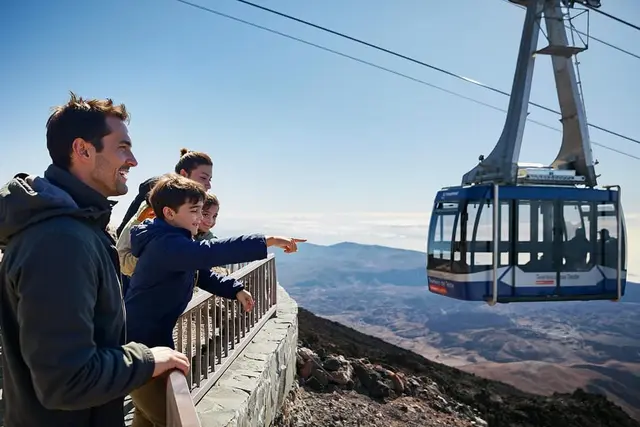
Teide with the cable car, no car needed
Seven hours with transfer and cable car ticket; the same price as on the official website.
GetYourGuide7 hours
Tenerife: Mount Teide Tour with Cable Car Ticket & Transfer
4.3 (6,095 reviews)
from €92Check availability
2
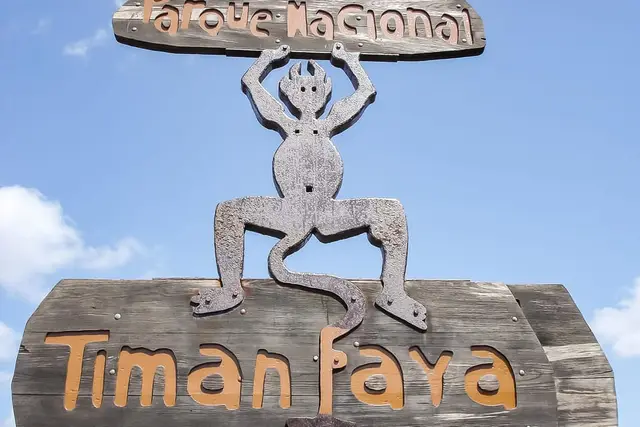
Timanfaya in half a day
A five-hour organised trip to the park, for anyone not hiring a car on Lanzarote (no public bus reaches the Islote).
GetYourGuide5 hours
Lanzarote: Timanfaya National Park – Half-day tour
4.4 (2,815 reviews)
from €59Check availability
3
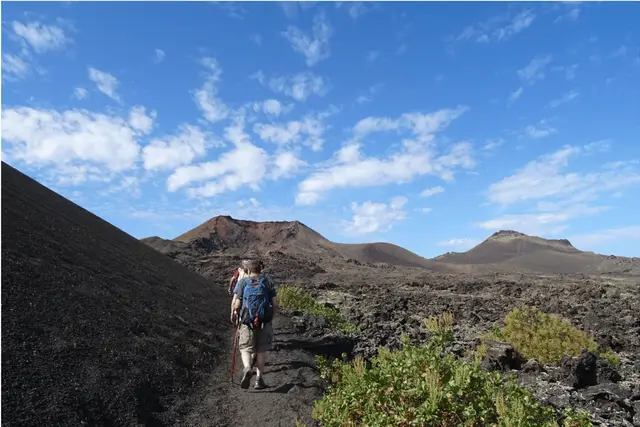
Walking among volcanoes on Lanzarote
Three hours on foot through landscapes from the 1730 eruption, outside the paid area; the coach tour does not let you get off.
GetYourGuide3 hours
Lanzarote: Hike Across Timanfaya's Volcanic Landscapes
4.8 (1,531 reviews)
from €44Check availability
4
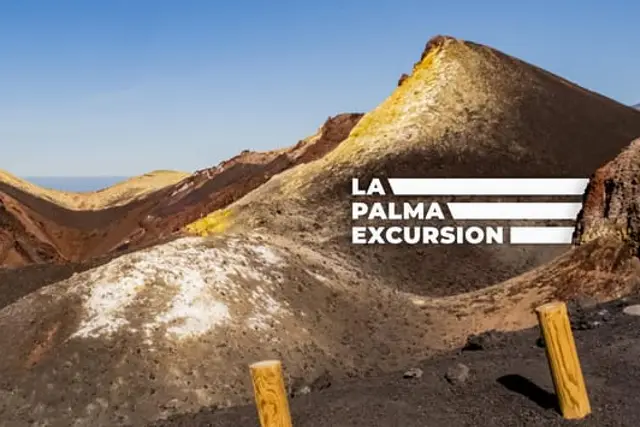
Tajogaite with a certified guide
The official route with a local guide, about four hours including transfers; the only legal way to get close to the cone.
GetYourGuide4 hours
Tajogaite Volcano: the official route with a certified local guide
4.9 (545 reviews)
from €37Check availability
5
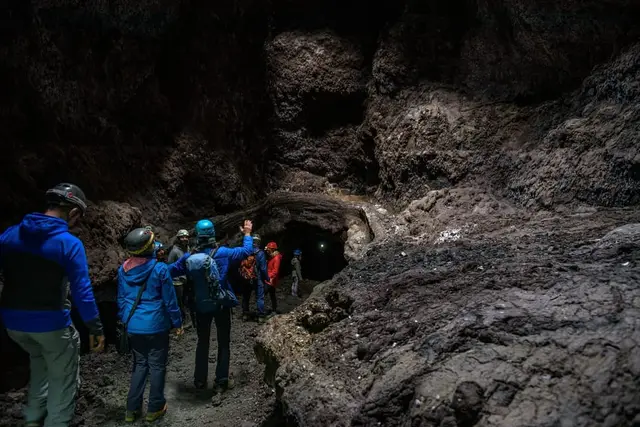
Inside a lava tube on La Palma
Two hours in the Cueva de Las Palomas, with helmet and lamp.
GetYourGuide2 hours
La Palma: Cueva de Las Palomas Volcanic Tube
4.7 (696 reviews)
from €25Check availability
GetYourGuide7 hours
Tenerife: Mount Teide Tour with Cable Car Ticket & Transfer
4.3 (6,095 reviews)
from €92Check availability
GetYourGuide9 hours
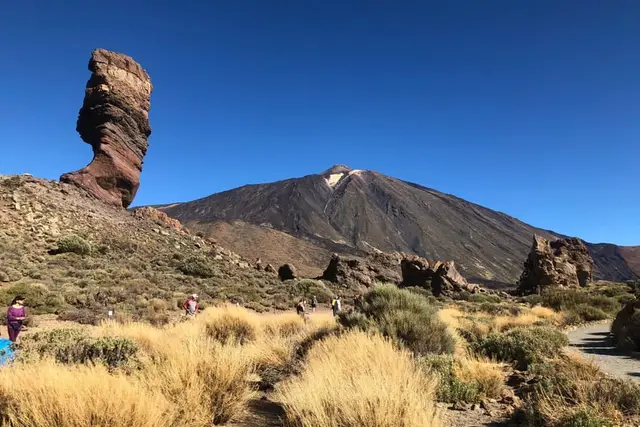
Tenerife: Teide National Park, Masca, Icod & Garachico Tour
4.6 (3,035 reviews)
from €58Check availability
GetYourGuide8 hours
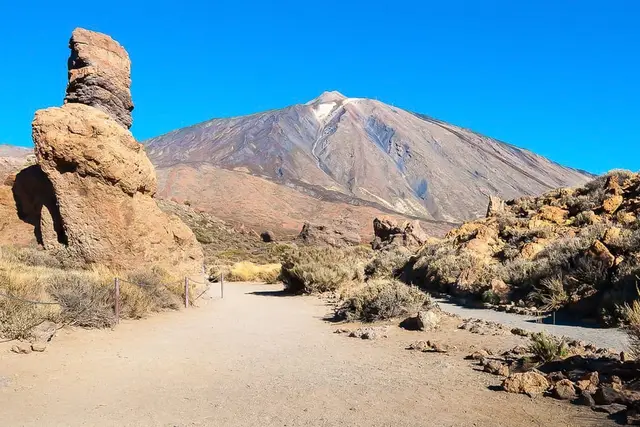
Tenerife: Teide National Park Full-Day Tour with Pick-up
4.5 (1,922 reviews)
from €59Check availability
GetYourGuide9 hours
Lanzarote: Timanfaya Park, Jameos del Agua, & Cueva de los Verdes Tour
4.5 (2,866 reviews)
from €89Check availability
GetYourGuide5 hours
Lanzarote: Timanfaya National Park – Half-day tour
4.4 (2,815 reviews)
from €59Check availability
GetYourGuide2.5 - 5 hours
Arrecife: Timanfaya and Green Lagoon for Cruise Passengers
4.6 (2,155 reviews)
from €49Check availability
See all options on GetYourGuide →Prices checked on 2 October 2026
Frequently asked questions
When was the last volcano eruption in the Canary Islands?
Tajogaite, on La Palma, from 19 September to 13 December 2021: 85 days. Before that, in 2011–2012, there was an underwater eruption off La Restinga, on El Hierro.
Are there active volcanoes in the Canary Islands?
Every main island except La Gomera has had eruptions in the last 11,700 years. The alert level is set by PEVOLCA and it changes: at the latest review Tenerife was still on green despite mild earthquake swarms, and La Palma on yellow because of CO₂ in Puerto Naos; check before you go.
Can you climb into Teide's crater?
To the summit, yes, with the PNT 10 permit from Tenerife ON (€15 for non-residents of the Canary Islands) on top of the cable car. Into the crater, no: leaving the trail is prohibited.
How much does it cost to visit Timanfaya?
Entry to Montañas del Fuego costs €30 per adult with a set time, is sold online only and includes the Ruta de los Volcanes by coach. The dromedary ride is paid separately: €11 per person.
Can you visit the La Palma volcano on your own?
Not the Tajogaite cone: only with a licensed company, for about €32–38. You can see the lava flow for free from viewpoints such as Tajuya church or Las Manchas.
What volcanoes are there on Gran Canaria?
It has had no historic eruptions. The volcano people visit is the Caldera de Bandama, a crater 216 m deep with a path that goes down to the bottom.