Visiting the Roque de los Muchachos can mean three different things. By day you can go inside the observatory with an accredited guide, see the Visitor Centre and look out from the summit viewpoint. At night the site is closed to the public: stargazing trips take place at astronomical viewpoints, with portable telescopes.
Our advice: the daytime guided tour (€20 to step inside the world's largest optical-infrared telescope is a bargain) and a night of stargazing at a viewpoint near where you're staying.
Roque de los Muchachos Observatory tours: what you see
The Roque de los Muchachos Observatory covers 189 hectares on the rim of the Caldera de Taburiente, in the municipality of Garafía, at 2,396 m. It is run by the Instituto de Astrofísica de Canarias (IAC), opened in 1985 and brings together one of the largest groups of telescopes in the world: the Gran Telescopio Canarias and some twenty other instruments.
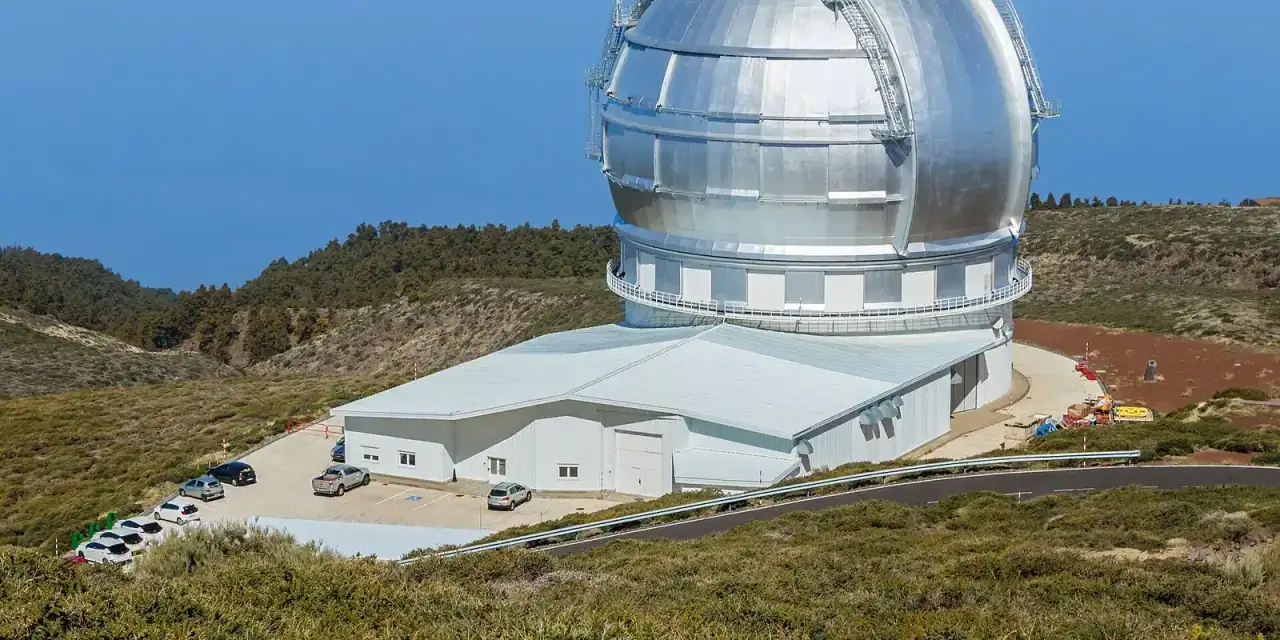
The Gran Telescopio Canarias (GTC) is the world's largest optical-infrared telescope. Its primary mirror is made of 36 hexagonal segments that work as a single 10.4 m mirror; it saw first light in 2007.
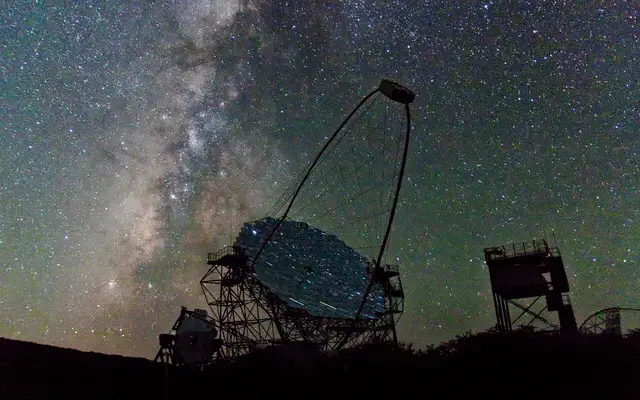
On the current tour you go inside the GTC and see the MAGIC telescopes and those of the Cherenkov Telescope Array (CTA) from outside, in an hour and a half to almost two hours. The domes are cold all year round: bring a warm layer even in summer.
Guided observatory tour: tickets, booking and conditions
Public tours are run by Starlight guides accredited by the Starlight Foundation and the IAC, in small groups and always by day (IAC programme). Companies with qualified guides include Ad Astra La Palma (adastralapalma.com), AstroLaPalma (lapalmastars.com), Astronorte, AsterArk and Nuevo Rumbo en La Palma; the first two are compared in Ad Astra and AstroLaPalma.
- Price: €20 (age 12 and over); €15 for ages 6 to 11 and La Palma residents; Astronorte charges the same. With an Ad Astra ticket, the Visitor Centre is half price for 7 days.
- Group: minimum 10 and maximum 22 people; minimum age 6, and under-18s with an adult.
- Languages: Spanish and English (with AstroLaPalma, Saturdays are Spanish only).
- Transport: not included. You meet in the Visitor Centre car park (it opens at 10:00) and drive up to the telescopes in your own car, in convoy behind the guide; you can't go in on your own.
- Dates: mornings; published one or two months ahead.
Is there a night tour of the observatory?
No. At night the observatory is for staff only: no stargazing tour goes into the domes or uses the professional telescopes.
If a night trip is advertised "at the Roque de los Muchachos", read the listing to see where the observing actually happens. On Tenerife, the Teide Observatory is also visited by day only (see the Teide guide).
Roque de los Muchachos Visitor Centre: opening hours and price
A joint project of the Cabildo (the island council), Garafía town council and the IAC: three rooms on the universe and the local area, an auditorium and a shop.
- Opening hours: daily from 10:00 to 16:30 in winter and 10:00 to 17:30 in summer; closed on 24, 25 and 31 December and 1 January.
- Price: €15; reduced €7.50 (Canary Islands residents, large families, pensioners and over-65s resident in Spain); under-12s free.
- Payment: card only; on the other hand, the GTC souvenir stand can't take cards because there's no signal, so bring some cash as well. Another Cabildo centre is half price with the voucher from the ticket desk.
- Facilities: free parking, vending machines only, accessible for people with reduced mobility (lapalmacentrosturisticos.com).
The Roque viewpoint and the LP-4 road
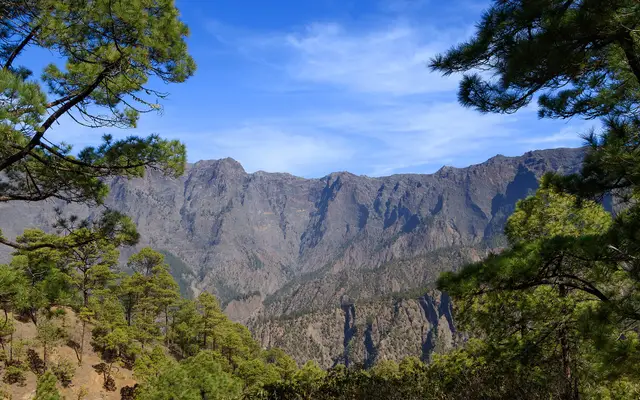
The Roque de los Muchachos, at 2,426 m, is the highest point on the island and in the national park: a free, tarmacked viewpoint and car park above the Caldera, with a park information hut (09:00–20:25 in summer; 10:00–18:00 in winter).
You drive up on the LP-4, from Santa Cruz (Mirca) to Garafía; around km 37, at the observatory residence, the spur to the summit branches off. It's a very winding mountain road and there's no public transport: only car, taxi or an organised tour. To fit it in with the rest of the island, see the La Palma guide.
La Palma stargazing: night tours
In 2012 La Palma became the first place in the world to be certified as both a Starlight Reserve and a Starlight Tourist Destination; it is one of three Starlight Reserves in the Canaries, with Cumbres de Tenerife and Fuerteventura. Its sky is protected by Law 31/1988 (BOE), the "Sky Law", and 17.3% of visitors to the island go out to look at it.
Prices on each company's website at the time of writing:
| Company | Price | How it works |
|---|---|---|
| Ad Astra La Palma | from €30 (12+), €18 (3–11), under-3s free | 1 h 30, 6–15 people, at Llano del Jable or Llano de Las Ventas; you drive there yourself |
| AstroLaPalma (lapalmastars.com) | €35 adult, €25 (4–11) | 2 h (3.5–4 h with the drive); you leave from their office in Los Cancajos following the guide's car |
| Astronorte | €35 | 2 h; premium private session, €300 (3 h) |
| Walk under the stars (Ad Astra) | €3 (€5 in July and August), under-18s free | Thursdays in Los Cancajos, 1 h on foot, no telescope, paid in cash to the guide |
On GetYourGuide there are sessions from about €35 and long trips with wine for about €55. Booking direct costs the same or a little less; what doesn't change is that you almost always get there under your own steam.
Our pick
1
Short session with a telescope
An hour and a half of sky with a guide; just right for a first night.
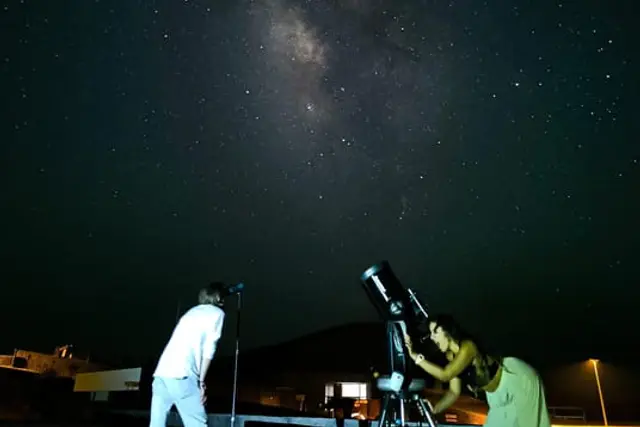
GetYourGuide1.5 hours
La Palma: Stargazing in the best sky in the world
4.2 (175 reviews)
from €38Check availability
2
Long night with wine
The most reviewed, 6 to 7 hours; it doesn't go into the observatory: check the listing for where you observe.
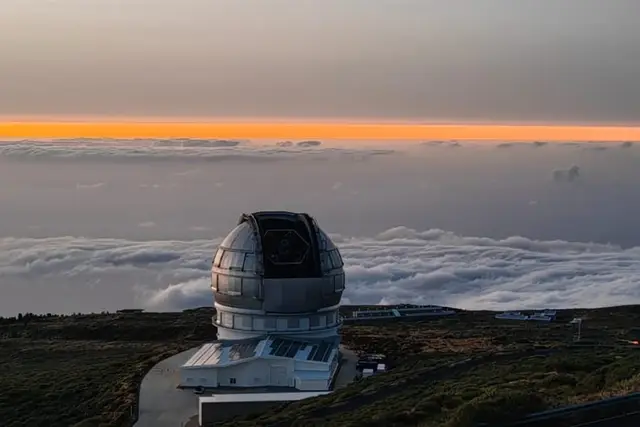
GetYourGuide6 - 7 hours
La Palma: Roque de los Muchachos Stargazing Tour with Wine
4.4 (708 reviews)
from €55Check availability
3
Observatory and Visitor Centre
The full daytime plan, five and a half hours; check the listing to see if transport is included.
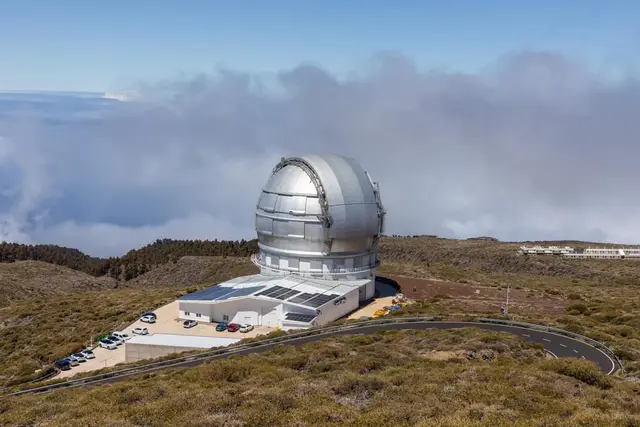
GetYourGuide5.5 hours
La Palma: Let's go to Roque Observatory & Visitor Centre
4.5 (10 reviews)
from €58Check availability
4
The summit on foot
A 4-hour guided walk on the Roque, by day.
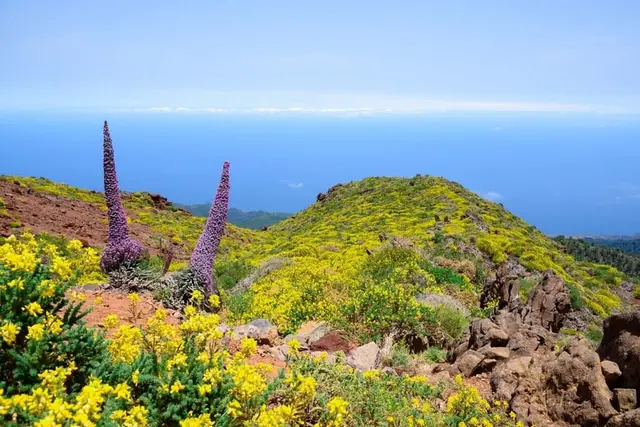
GetYourGuide4 hours
La Palma: Guided Trekking Tour to El Roque de los Muchachos
4.8 (141 reviews)
from €32Check availability
La Palma stargazing spots you can reach on your own
The island has a network of 16 astronomical viewpoints: Llano de Las Ventas (Breña Baja), Llano del Jable (El Paso), San Bartolo (Puntallana), El Molino (Barlovento), Montaña Buracas (Garafía), Miraflores (Puntagorda), La Muralla (Tijarafe), Pico de la Cruz and Mirador al Infinito (Roque area), Barranco del Carmen (Santa Cruz), Parque de Los Álamos (Breña Alta), Montaña Las Toscas (Mazo), Volcán de San Antonio (Fuencaliente), Mendo (El Paso), Las Hoyas (Los Llanos) and San Borondón (Tazacorte).
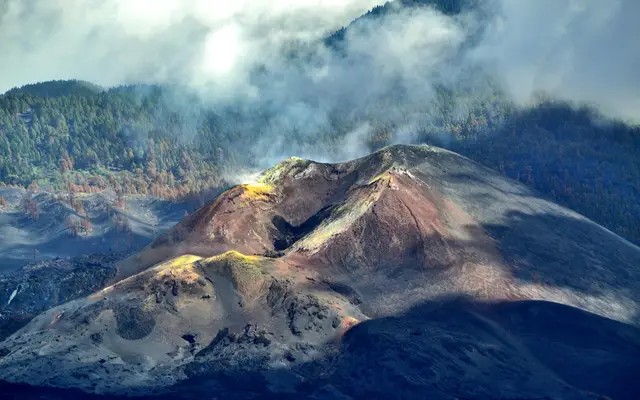
None has public transport: pick the one closest to where you're staying, on whichever side is clear that night. Llano del Jable is also the start of the guided Tajogaite volcano route, and Fuencaliente is a Starlight Tourist Destination in its own right.
- 1Roque de los MuchachospeakDirections ↗
- 2Llano del JablesightDirections ↗
- 3Refugio de El Pilarnature areaDirections ↗
- 4Los CancajosbeachDirections ↗
- 5Volcán San AntoniopeakDirections ↗
- 6Santa Cruz de La PalmaportDirections ↗
When to go stargazing and what to bring
Tonight—— illuminated
Upcoming new moons
The best nights for stargazing are the five days either side of the new moon.
More than the season, what makes or breaks a night is the Moon. Ad Astra doesn't run sessions on nights close to the full moon, and AstroLaPalma warns that the sky isn't dark then: check the new-moon calendar before fixing a date. The other islands are covered in stargazing in the Canary Islands.
Cold, altitude and what to bring
- Cold: on the summit it drops below freezing in winter; at any time of year bring a warm coat, long trousers and closed shoes, at night too. Month-by-month climate in Canary Islands weather.
- Altitude: at about 2,400 m, companies advise against it for people with anaemia or heart or breathing problems, for over-70s without checking with a doctor, and for babies. There's no medical service at the top.
- Food and fuel: the observatory has no café, and there's no petrol station at the top.
GetYourGuide6 - 7 hours
La Palma: Roque de los Muchachos Stargazing Tour with Wine
4.4 (708 reviews)
from €55Check availability
GetYourGuide4 hours
La Palma: Guided Trekking Tour to El Roque de los Muchachos
4.8 (141 reviews)
from €32Check availability
GetYourGuide1.5 hours
La Palma: Premium Stargazing Tour for 10
4.2 (65 reviews)
from €75Check availability
GetYourGuide2 hours
Experience a stargazing tour with a telescope in La Palma
4.4 (43 reviews)
from €39Check availability
GetYourGuide1.5 hours
La Palma: Stargazing in the best sky in the world
4.2 (175 reviews)
from €38Check availability
GetYourGuide5.5 hours
La Palma: Let's go to Roque Observatory & Visitor Centre
4.5 (10 reviews)
from €58Check availability
See all options on GetYourGuide →Prices checked on 2 October 2026
How do you book a Roque de los Muchachos Observatory tour?
On the website of a company with accredited Starlight guides, such as Ad Astra La Palma, AstroLaPalma or Astronorte. It costs €20 (€15 for ages 6 to 11) and you make your own way there.
Can you visit the observatory at night?
No. At night the observatory is open to staff only; stargazing tours take place at astronomical viewpoints with portable telescopes.
What are the Roque de los Muchachos Visitor Centre opening hours?
10:00 to 16:30 in winter and 10:00 to 17:30 in summer, every day except 24, 25 and 31 December and 1 January. Entry costs €15 and is card only.
Where are the best stargazing spots in La Palma?
The island's 16 astronomical viewpoints, such as Llano del Jable, Llano de Las Ventas or the Volcán de San Antonio, away from the full moon. With a telescope and a guide, on a night tour.
How high is the Roque de los Muchachos Observatory?
2,396 m. The Roque de los Muchachos, the island's summit right next to it, is 2,426 m.