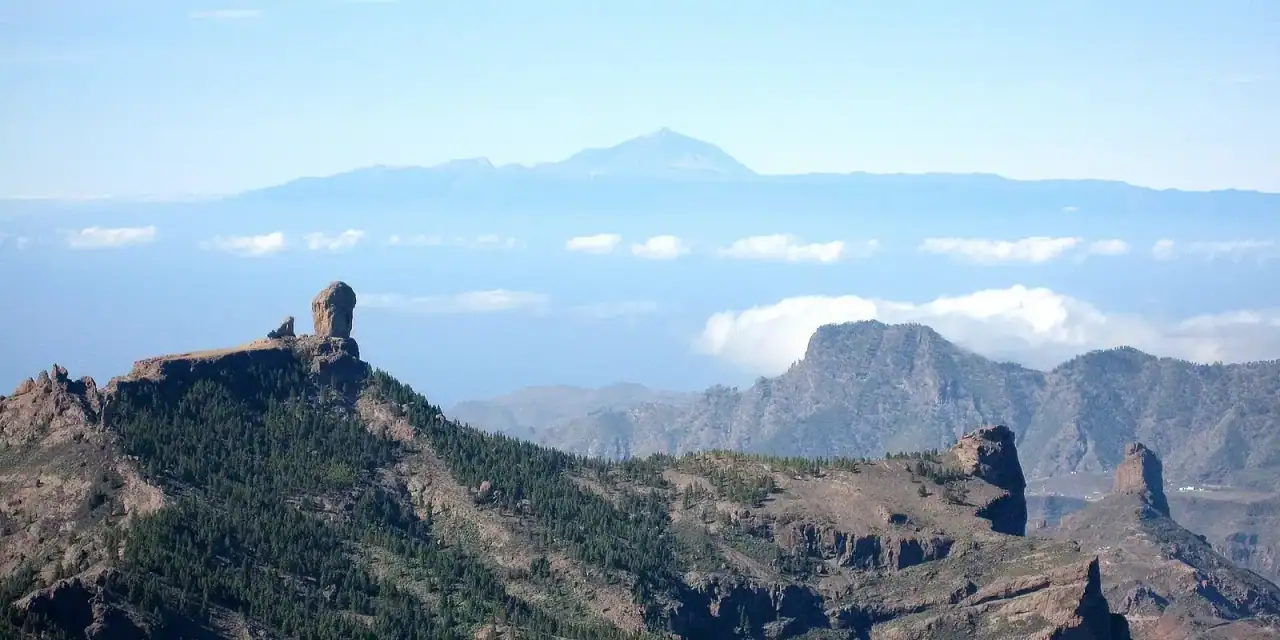
What to see in the Canary Islands depends on the island you're standing on, and the seven are not interchangeable. Tenerife has Spain's highest peak and the biggest fleet of whale-watching boats; Fuerteventura, beaches and wind; La Palma, trails and stars; Lanzarote, lava and César Manrique. Choosing well matters: according to the latest official tourist spending survey, 93% of visitors never leave the island they fly into.
We are an independent guide, not the official website of any park or island council (cabildo): we compare the price of every tour on the booking platforms with the official price and, if buying direct works out cheaper, we say so.
Map of the Canary Islands
Outlines: © OpenStreetMap contributors
The seven islands, one paragraph each
What each island offers
Teide, whales and theme parks
The most complete island and the most visited: four in ten tourists to the Canaries.
Dunes, peaks and a real city
Maspalomas, Roque Nublo and Las Palmas; the best island for getting around by bus.
Volcanoes and César Manrique
Timanfaya, Jameos del Agua and the island with the most satisfied visitors.
Beaches and wind
80% of its visitors head to the beach; the capital of surfing and windsurfing.
Hiking and stars
More than half its visitors go walking; an observatory at 2,396 m.
Laurel forest and silbo
Garajonay, boat trips from Valle Gran Rey and a 50-minute ferry from Tenerife.
Diving and calm
La Restinga, a marine reserve and the least visited island.
Tenerife
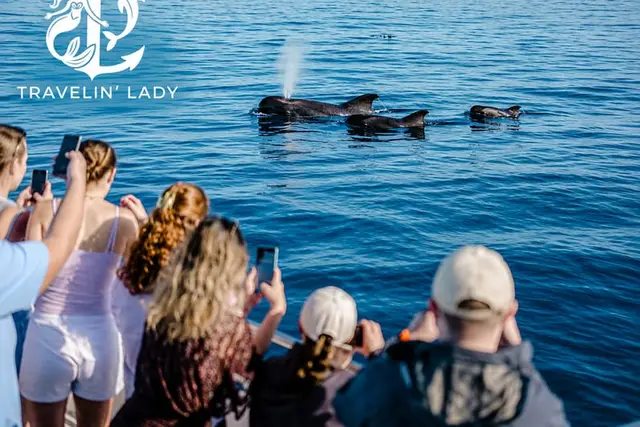
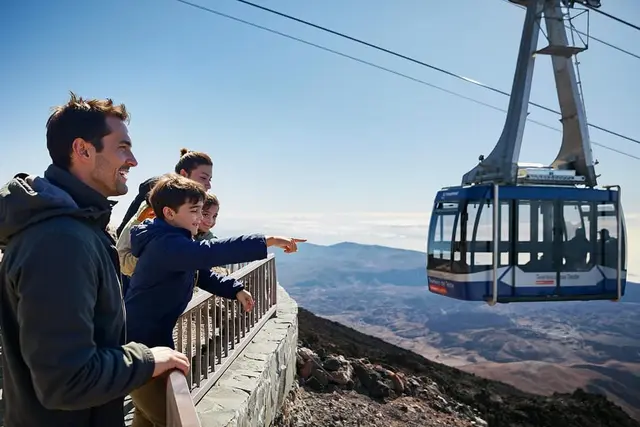
The largest island and the one that welcomes the most people. Mount Teide stands 3,715 m high: the cable car climbs to 3,555 m (€43 return) and the summit needs a separate permit from Tenerife ON, €15 for non-residents. Out at sea, 113 of the 184 boats licensed for whale and dolphin watching in the Canaries are based here, because pilot whales live off the south-west coast all year round. Siam Park and Loro Parque (€44 each) make it the family island. The beaches are almost all dark sand.
Gran Canaria
The Maspalomas dunes, Roque Nublo and Las Palmas, the most populous city in the Canaries. It has more Blue Flag beaches than any other island (15 on the latest list), the liveliest nightlife and the bus network tourists use most. We cover it at leisure in the next section.
Lanzarote
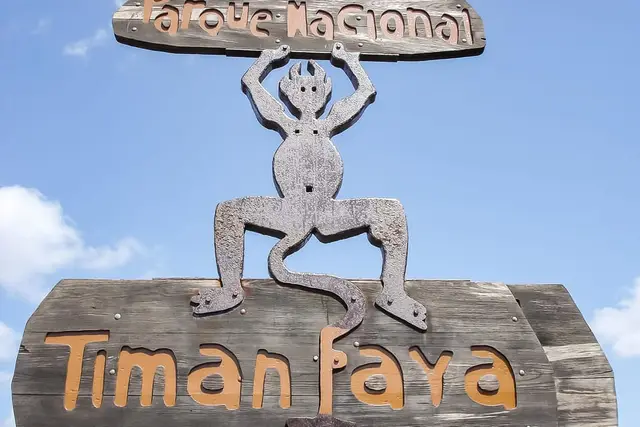
A quarter of the island was buried under lava between 1730 and 1736, and César Manrique designed several of the island council's visitor centres you can see today. There is no longer a combined pass: Montañas del Fuego (Timanfaya, €30) and Cueva de los Verdes (€17) are sold online only, with a fixed time slot, and you don't walk in Timanfaya: you tour it by coach for 35 minutes. With no forests or high mountains, it still has the highest satisfaction score of the islands surveyed, and the boat to La Graciosa (€29 return) leaves from Órzola.
Fuerteventura
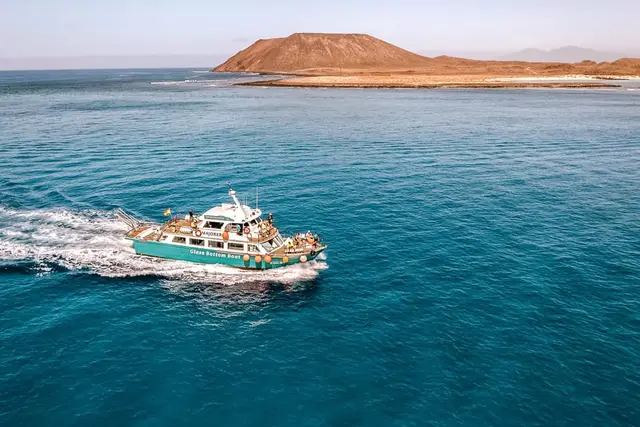
The beach island: 80% of its visitors go to the beach. It has the Corralejo dunes, Cofete, the islet of Lobos (€17 for the return boat, plus a free permit from the Cabildo) and three times as many surfers as the Canary average, and it is the cheapest of the four big islands for hotels. The downsides: it is about 100 km from north to south, public transport is patchy and its only water park closes from early November to late March.
La Palma
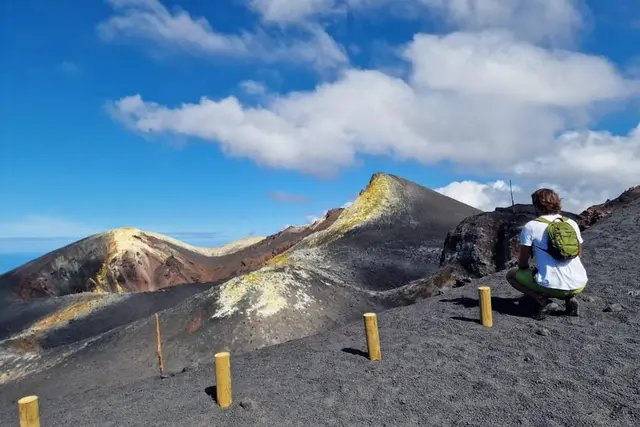
The hikers' island: 58% of its visitors go walking and 83% hire a car. You can only reach the cone of Tajogaite, which erupted in 2021, with an authorised guide, although there are free viewpoints over the lava flow. Up top is the Roque de los Muchachos Observatory, at 2,396 m, home to the world's largest optical-infrared telescope. Small black-sand beaches: this is not a sun-lounger island.
La Gomera
Fifty minutes by ferry from Los Cristianos, with no international flights. Its heart is Garajonay, a national park of laurel forest and a World Heritage Site since 1986; its signature, the silbo gomero whistled language. The beaches are black, and in winter those at Valle Gran Rey can be stripped down to pebbles. How to see it in a day from Tenerife: La Gomera day trip.
El Hierro
The smallest and the least visited: hotel occupancy hovers around 41% even in December. People come to dive at La Restinga, next to a marine reserve, with visibility of up to 50 m; a try dive costs €65 to €85. It is not "100% renewable": Gorona del Viento covered around 44% of its electricity in the last full year published (56% in its best year). The ferry from Los Cristianos takes 2 h 20 min, so it doesn't work as a there-and-back day trip.
Gran Canaria places to visit and tourist attractions
Gran Canaria makes sense in three parts: the beach resorts of the south, the central peaks, and the north with the capital. Almost half the island is a Biosphere Reserve, and Risco Caído and the Sacred Mountains, in Artenara, have been a World Heritage Site since 2019.
- 1Dunas de Maspalomasnature areaDirections ↗
- 2Faro de MaspalomassightDirections ↗
- 3Puerto de MogánportDirections ↗
- 4Roque NublopeakDirections ↗
- 5Pico de las NievespeakDirections ↗
- 6TejedatownDirections ↗
- 7TerortownDirections ↗
- 8VeguetasightDirections ↗
- 9Las CanterasbeachDirections ↗
- 10Caldera de Bandamanature areaDirections ↗
The south: Maspalomas, Puerto Rico and Puerto de Mogán
The Maspalomas dunes are a 403.9-hectare nature reserve you may only walk on along the four marked trails: straying off them carries a fine of €150 to €600, and sunset is when most people do it. To see them without setting foot on the sand, there's the Mirador de las Dunas viewpoint in Playa del Inglés; at the other end, the Maspalomas Lighthouse (Faro de Maspalomas) and La Charca, a lagoon with a boardwalk for birdwatching.
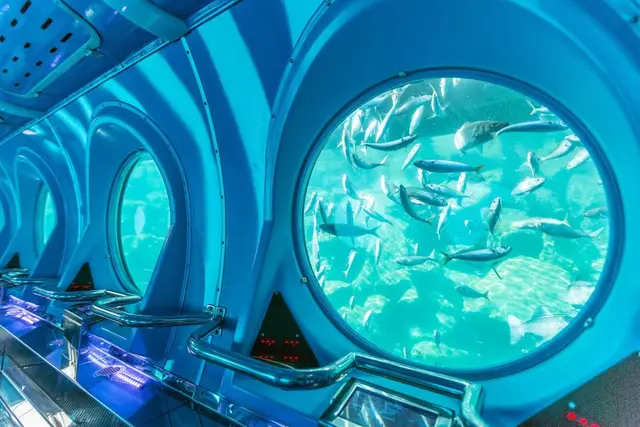
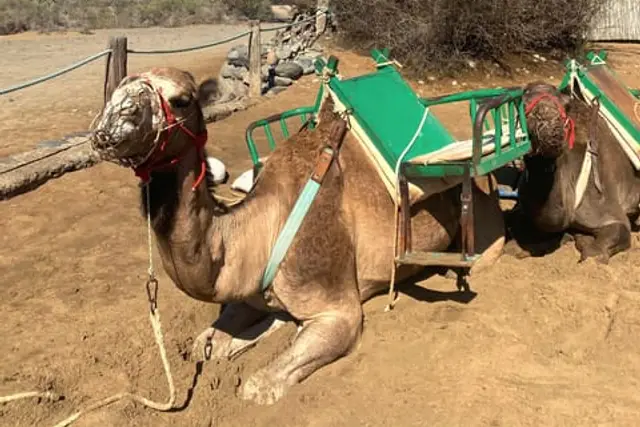
The camels on the dunes belong to Camello Safari Dunas: €18 per adult and €13 per child, 30–35 minutes, only from 09:15 to 14:15. In Puerto de Mogán the stars are the Friday market and Submarine Adventure, the "yellow submarine" (€38 at the ticket office, 10% less online on its own website). From Puerto Rico, the boat costs €8 and the bus €1.55.
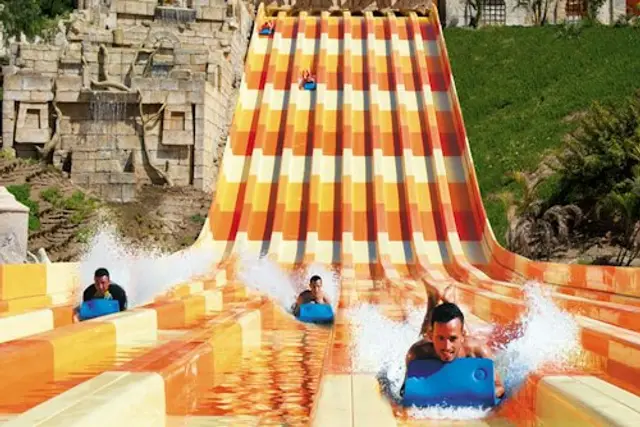
Aqualand Maspalomas, the island's big water park, opens every day of the year, and this is where buying direct really shows:
| Where | Ticket | Rating | Price | Where to book |
|---|---|---|---|---|
| GetYourGuide | Maspalomas: Aqualand Maspalomas Water Park Entry Ticket | 4.1 (1,654) | €41 | View on GetYourGuide |
| Tiqets | Aqualand Maspalomas: Online Ticket | 4.2 (217) | €41 | View on Tiqets |
| Official website | Aqualand Maspalomas, official online fare (from; €41 at the gate) | — | €32 Cheapest | Official site ↗ |
Adult prices checked on 2 October 2026. They may vary by date; each site confirms the final price.
The platforms charge the ticket-office price, €41; the park's own website sells date-specific tickets from €32 (https://www.aqualand.es/maspalomas/). If you know which day you're going, buy direct; if you want to be able to cancel up to the day before, the platform gives you more leeway. More in Aqualand and water parks.
The peaks: Roque Nublo, Tejeda and Pico de las Nieves
Roque Nublo (1,813 m) is free, but between 10:00 and 17:00 you have to book to go in via La Goleta at https://grancanariasenderos.com/; without a booking, you'll be turned back at the checkpoint. The La Goleta car park is closed: park at Cruz de Los Llanos or in Tejeda. Without a car, bus 18 leaves Faro de Maspalomas at 08:00 and 09:00 (€6).
The Pico de las Nieves viewpoint stands at 1,949 m, but the island's true high point is neighbouring Morro de la Agujereada (1,956 m), a military zone. Tejeda is the place for bienmesabe, the local almond cream, and, in January and February, for almond trees in blossom. Routes and transport in Gran Canaria day trips.
The north and Las Palmas
In Las Palmas, Las Canteras has just over 3 km of beach sheltered by La Barra, a reef about 200 m offshore. In Vegueta, the Casa de Colón costs €4 and is free on Sundays; the Poema del Mar aquarium (€29) sits next to the cruise terminal. Across the north: the basilica in Teror, the Cueva Pintada in Gáldar (€6, free on Sundays) and the Arehucas rum distillery in Arucas (€10), which only opens on weekdays. And the Caldera de Bandama, 216 m deep, has a path that leads right down to the bottom.
Things to do in the Canary Islands by theme
| Theme | Best island | Why | Guide |
|---|---|---|---|
| Whales and dolphins | Tenerife | 113 of 184 licensed boats; resident pilot whales all year | Whale and dolphin watching |
| Volcanoes | Lanzarote, Tenerife, La Palma | Timanfaya, Teide and the Tajogaite lava flow: three different experiences | Canary Islands volcanoes |
| Stargazing | La Palma | The first Starlight Reserve in the Canaries; 17% of its visitors go stargazing | Stargazing |
| Hiking | La Palma, La Gomera | The GR 131 crosses all seven islands in about 560 km | Hiking |
| Diving | El Hierro, Lanzarote | Three marine reserves; angel sharks from November to April | Diving |
| Water parks | Tenerife, Gran Canaria | Siam Park and both Aqualands open all year; Fuerteventura has none open in winter | Water parks |
Everything else, from surfing to wineries, is in activities by type.
When to go to the Canary Islands
High season runs from October to March, and March is the month with the most arrivals; May and June are the quietest. The sea is warmest in September and October (23–24 °C) and coolest in February and March (18.3–19.6 °C). December is the wettest month on every island: 30 mm on average at Tenerife South airport, 80 mm at La Palma's.
The most useful rule of thumb: the north of the high islands is cooler and cloudier than the south. In January, Tenerife South reaches highs of around 21.7 °C and Tenerife North airport, at 632 m, 16 °C. Lanzarote and Fuerteventura are the driest. Figures for every island in Canary Islands weather month by month and, for winter, in the Canary Islands in December.
Which Canary Island is best for you?
Tick what interests you and the tool ranks the islands.
What are you after? Tick what matters to you and we'll rank the islands.
Tick one or more interests to see which island suits you best.
| Beaches | With kids | Hiking | Volcanoes | Stargazing | Surf and wind | Diving | Nightlife | Peace and quiet | No car | |
|---|---|---|---|---|---|---|---|---|---|---|
| TenerifeMount Teide, year-round whales and the big theme parks | ||||||||||
| Gran CanariaMaspalomas dunes, high peaks and a capital with a beach | ||||||||||
| LanzaroteTimanfaya's volcanoes and the work of César Manrique | ||||||||||
| FuerteventuraThe best beaches, wind and surf | ||||||||||
| La PalmaHiking trails, a recent volcano and the clearest skies | ||||||||||
| La GomeraGarajonay's laurel forest, 50 minutes from Tenerife | ||||||||||
| El HierroThe smallest and quietest; diving at La Restinga |
Editorial score from 0 to 3, based on the official Canary Islands tourism survey, Blue Flag beaches and what each island actually offers. Not an official ranking.
The full comparison, with what visitors actually do on each island, is in which Canary Island is best.
Getting between the islands
The ferries are run by Fred. Olsen Express and Baleària Canarias (formerly Naviera Armas); Binter and Canaryfly fly between the islands in under 50 minutes. The cheap fares you see advertised are for residents: visitors pay the full fare.
- Tenerife – La Gomera: 50 min from Los Cristianos, from €39.74.
- Tenerife – Gran Canaria: 80 min from Santa Cruz to Agaete with Fred. Olsen, from €45.98.
- Lanzarote – Fuerteventura: 25–35 min from Playa Blanca to Corralejo; with Líneas Romero, €20.50 as a foot passenger.
La Gomera and El Hierro can only be reached by ferry or inter-island flight. Routes and combinations in ferries and flights between the islands.
Recommended Canary Islands tours
Chosen for what they add, not just for their rating. Who runs each one is in our operator reviews.
Our pick
1
Whale watching in Tenerife
An hour and a half around the resident pilot whales' waters; the tour with the most reviews in the Canaries.
GetYourGuide1.5 hours
Travelin' Lady: Eco Yacht Whale & Dolphin Safari + Swim
4.7 (19,421 reviews)
from €29.90Check availability
2
Submarine in Puerto de Mogán
Dives to 20–25 m over an artificial reef; children from age 2. On its own website, 10% less if you buy online before the day.
GetYourGuide40 minutes
Puerto de Mogán: Submarine Tour
4.4 (4,446 reviews)
from €38Check availability
3
Timanfaya without a car
No scheduled bus goes up to Montañas del Fuego; a half-day that includes the Ruta de los Volcanes.
GetYourGuide5 hours
Lanzarote: Timanfaya National Park – Half-day tour
4.4 (2,815 reviews)
from €59Check availability
4
Lobos from Corralejo
Return trip at the official price; the free Cabildo permit is requested separately.
GetYourGuide
Fuerteventura: Lobos Island Ferry from Corralejo (Return)
4.7 (3,649 reviews)
from €17Check availability
5
La Palma's volcano
The only way to set foot on the Tajogaite lava flow is with an authorised guide.
GetYourGuide4 hours
La Palma: Tajogaite Volcano Guided Trek
4.8 (2,198 reviews)
from €38Check availability
GetYourGuide1.5 hours
Travelin' Lady: Eco Yacht Whale & Dolphin Safari + Swim
4.7 (19,421 reviews)
from €29.90Check availability
GetYourGuide7 hours
Tenerife: Mount Teide Tour with Cable Car Ticket & Transfer
4.3 (6,095 reviews)
from €92Check availability
GetYourGuide30 minutes
Maspalomas: Guided Camel Riding in the Maspalomas Sand Dunes
4.4 (5,243 reviews)
from €18Check availability
GetYourGuide40 minutes
Puerto de Mogán: Submarine Tour
4.4 (4,446 reviews)
from €38Check availability
GetYourGuide5 hours
Lanzarote: Timanfaya National Park – Half-day tour
4.4 (2,815 reviews)
from €59Check availability
See all options on GetYourGuide →Prices checked on 2 October 2026
All our guides
Find your plan
Filter by island and type. Prices are a per-person starting point.
Island
Type
Frequently asked questions
What can you see in the Canary Islands in a week?
One island and, at most, one boat trip: La Gomera from Tenerife, La Graciosa from Lanzarote or Lobos from Fuerteventura. Switching between big islands eats up almost a whole day.
Which Canary Island is best for kids?
Tenerife, for Siam Park, Loro Parque and the whale-watching boats. The alternative is Gran Canaria, with Aqualand and Palmitos Park open every day.
When is the best time to visit the Canary Islands?
For swimming, September and October (sea at 23–24 °C). For escaping the cold, November to March in the south of Tenerife or Gran Canaria. May and June are the quietest months.
Do you need a car in the Canary Islands?
It depends on the island. In Gran Canaria 41% of tourists get around by bus; in La Palma 83% hire a car, and in Fuerteventura the distances are long.
Can you swim with dolphins in the Canary Islands?
Not with wild dolphins or whales: swimming within 500 m of whales and dolphins is prohibited. The swim stops on the boat trips take place in coves, with no animals nearby.
Are the Canary Islands in the EU?
Yes, but outside the EU VAT area. When you head home, non-EU allowances apply: 200 cigarettes and 1 litre of spirits over 22% per person.
Is there a tourist tax in the Canary Islands?
There is no regional tax. Only Mogán, in Gran Canaria, charges a surcharge of €0.15 per person per night; the courts struck it down, but the town council has appealed and keeps charging it until there is a final ruling.