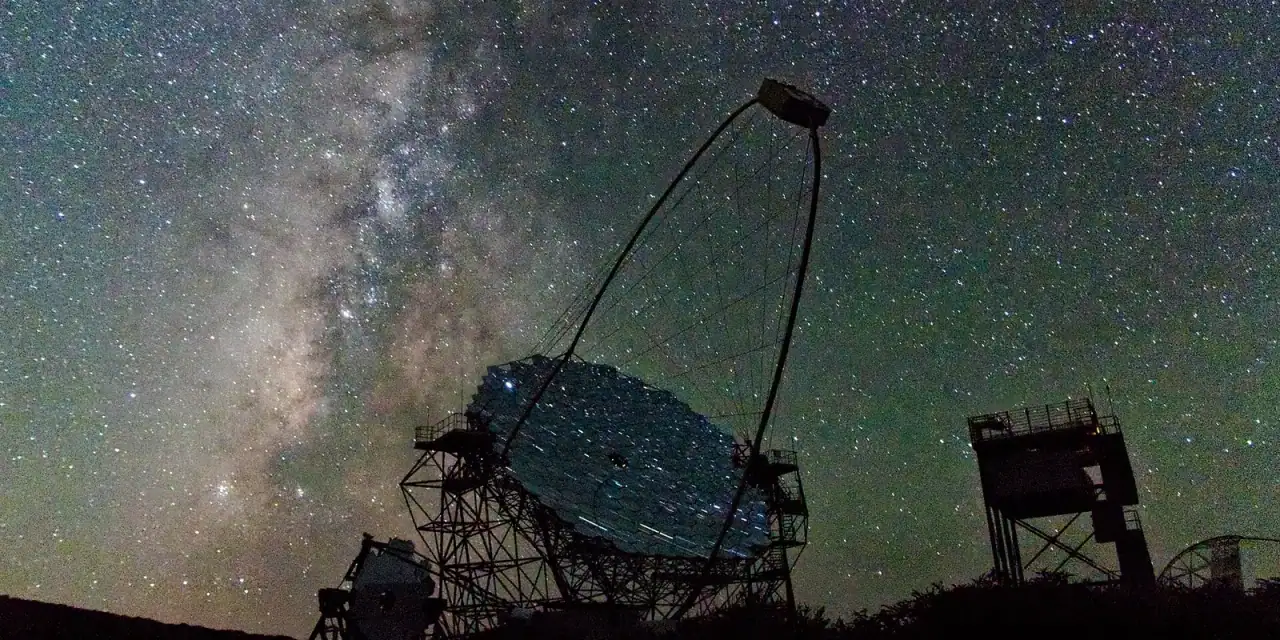
For stargazing in the Canary Islands there is one clear answer: La Palma. It is the island where 17 % of visitors go out to look at the sky, three times as many as on Tenerife, and it has the Roque de los Muchachos observatory, 16 signposted astronomical viewpoints and several companies of Starlight guides. Second comes Teide National Park, with the widest choice of tours with hotel pick-up and dinner.
If you would rather not climb to 2,000 m at night, Fuerteventura is the mild option: the whole island is a Starlight Reserve. Gran Canaria and El Hierro also have areas certified as Starlight Destinations.
Where to see the stars in the Canary Islands
Roque de los Muchachos, Llano del Jable, 16 viewpoints
The first Starlight Reserve; daytime visits to the GTC and night tours from €30.
Teide National Park and Izaña
Cumbres de Tenerife Reserve; observatory by day for €21 and tours with dinner.
Sicasumbre, Calderón Hondo
The whole island is a Starlight Reserve; mild nights at low altitude and guided trips from €45.
Tejeda summits and Roque Nublo
Starlight Destination (Santa Lucía de Tirajana too); sunset and stargazing tours from €45.
La Frontera, Faro de Orchilla
La Frontera is a Starlight Destination; Orchilla is a dark spot you can drive to.
The Sky Law and the Starlight reserves
The Canary Islands sky has been protected by law since 1988. Law 31/1988 (Ley 31/1988), which protects the astronomical quality of the observatories of the Instituto de Astrofísica de Canarias (IAC), is implemented by Royal Decree 243/1992, and since 1992 the IAC has had a technical office dedicated to monitoring light pollution.
On top of that come the certifications of the Starlight Foundation (Fundación Starlight), based at the IAC itself. There are three Starlight Reserves in the Canaries: La Palma (April 2012), Cumbres de Tenerife (October 2013) and Fuerteventura (March 2015). And eight Starlight Tourist Destinations: La Palma, Granadilla de Abona, El Teide, Gran Canaria, La Matanza de Acentejo, Fuencaliente de La Palma, Santa Lucía de Tirajana and La Frontera (El Hierro). Watch out for a common mix-up: Teide National Park is a destination; the Tenerife reserve is called Cumbres de Tenerife.
The other reason for the clear skies is the weather. A temperature inversion forms over the islands and traps moisture between roughly 700 and 1,500 m: the famous sea of clouds. It shows up in more than 90 % of soundings from April to September, which is why both observatories sit above it.
The two observatories and how to visit them
First, a point that saves disappointment: no night tour goes inside an observatory. The domes can only be visited by day; night trips use portable telescopes at viewpoints.
Roque de los Muchachos Observatory (La Palma)
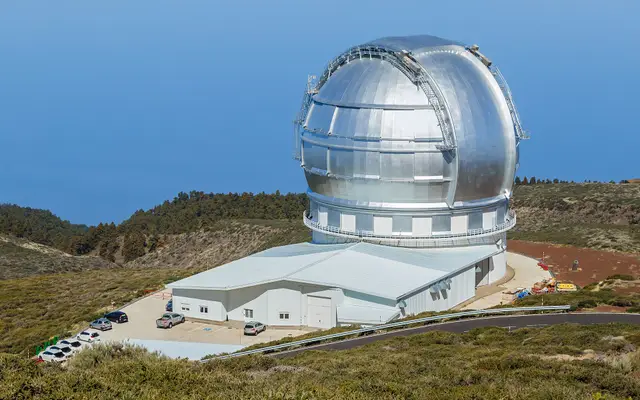
It stands at 2,396 m, in Garafía, on the rim of the Caldera de Taburiente (the summit of the Roque itself, at 2,426 m, is a different spot). It has some twenty telescopes and the Gran Telescopio Canarias (GTC), the world's largest optical-infrared telescope: 36 hexagonal mirrors that add up to the equivalent of a single 10.4 m mirror.
Visits are run by accredited Starlight guides in the morning, in groups of 10 to 22, and last between an hour and a half and two hours: you go inside the GTC and see the MAGIC and CTA telescopes from outside. They cost €20 (€15 for ages 6 to 11 and La Palma residents), are open to ages 6 and up, and are booked in advance through the Starlight guide companies; the conditions are on the IAC visits page. You drive your own car, in convoy with the guide, and transport is not included. The IAC says visits are suspended from December to March because of the weather, so in winter confirm dates before planning your trip.
The Roque Visitor Centre costs €15, but your observatory visit ticket gets you 50 % off for seven days. Pay by card: cash is not accepted. All the details are in stargazing on La Palma.
Teide Observatory (Tenerife)
At Izaña, at 2,390 m, also run by the IAC. The guided daytime visit costs €21, is free for ages 8 to 16 and does not admit children under 8. It lasts an hour and a half, includes solar telescopes and the inside of a night-time telescope, and is sold only by Volcano Teide at volcanoteide.com. You need your own car and photo ID. It is the cheapest way to set foot in a professional observatory.
Island by island: the best places for stargazing
- 1Roque de los MuchachospeakDirections ↗
- 2Llano del JablesightDirections ↗
- 3Volcán San AntoniopeakDirections ↗
- 4Observatorio del TeidesightDirections ↗
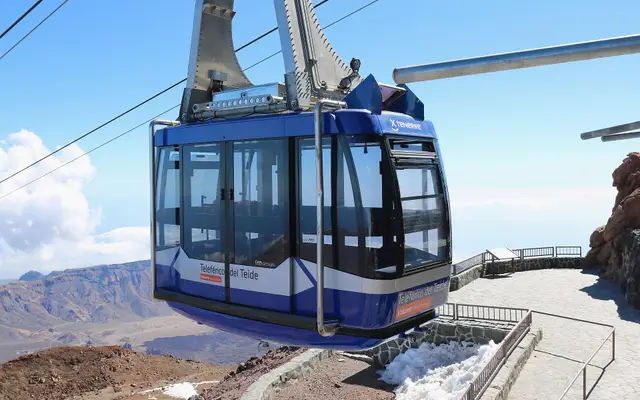
- 5Teleférico del TeidesightDirections ↗
- 6Calderón HondopeakDirections ↗
- 7TejedatownDirections ↗
- 8Faro de OrchillasightDirections ↗
La Palma: 16 astronomical viewpoints
The island has a network of 16 astronomical viewpoints, among them Llano del Jable and Llano de Las Ventas (the first ones), Volcán de San Antonio, Pico de la Cruz, San Bartolo and Montaña Las Toscas. The companies pick one each night depending on the weather. Ad Astra La Palma charges from €30 (from €18 for ages 3 to 11) for a 90-minute session; AstroLaPalma, €35 for adults and €25 for children, setting off from its office in Los Cancajos and following the guide's car; Astronorte, €35 for two hours. With Ad Astra and AstroLaPalma you go in your own car: there is no public transport to the viewpoints. Read our review of the astrotourism companies.
The wine tour that the booking platforms advertise "at the Roque de los Muchachos" is a night outing near the observatory, not inside it: at night the domes are closed to the public.
For a cheap first taste, Los Cancajos has a walk under the stars on Thursdays for €3 (€5 in July and August, free for under-18s), without a telescope. No bus goes up to the Roque de los Muchachos and there is no petrol station at the top: fill up before the LP-4, a very twisty mountain road. More ideas in the La Palma guide.
Tenerife: Teide National Park
Tenerife's tourist board (Turismo de Tenerife) recommends Montaña de Guajara, the area around the Parador, the Llano de Ucanca viewpoint and Izaña. You do not need a permit to look at the sky from a roadside viewpoint, but inside the park you cannot camp or sleep in your car or campervan, and the cable car car park is closed at night. Smoking is not allowed either.
The choice of tours is the biggest in the archipelago. Stargazing by the cable car base station costs €35 if you make your own way there (€77 with transfer); sunset and stargazing tours from €35–40 on the booking platforms; with dinner, from €55. Only Volcano Teide's Sunset & Stars (€159) takes the cable car up to 3,555 m for sunset. None of Volcano Teide's night products admits children under 8, and there are fewer departures from the north. More in the Teide guide.
Fuerteventura: the mild reserve
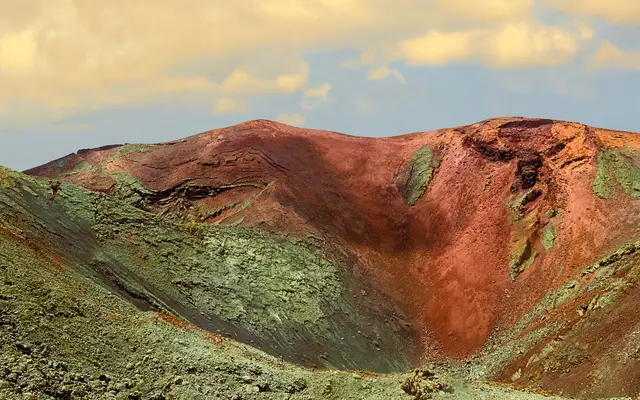
The whole island is a Starlight Reserve, and it is the option for anyone who does not fancy a cold mountain trip. The Sicasumbre viewpoint, in Pájara, was the island's first astronomical viewpoint, with information panels, a sundial and telescope mounts. Guided trips combine the Calderón Hondo volcano, near Lajares, with stargazing: three hours, from €45. More ideas in Fuerteventura.
Gran Canaria and El Hierro
Gran Canaria is a Starlight Destination, and Santa Lucía de Tirajana has its own certificate. There are sunset and stargazing tours with pick-up from €45 and an astronomical walking route from Tejeda, from €59.95. If you go to Roque Nublo on your own, the compulsory booking only applies from 10:00 to 17:00: at sunset you do not need it, but the La Goleta car park is closed and you have to leave the car at Cruz de Los Llanos or in Tejeda (details in trips into the interior of Gran Canaria). A curiosity: at Risco Caído, a World Heritage Site, an Aboriginal cave works as a solar and lunar marker.
On El Hierro, La Frontera has been a Starlight Destination since October 2023, and the Faro de Orchilla lighthouse, in El Pinar, is a good dark spot you can drive to. It was the prime meridian before Greenwich. More in El Hierro.
When to go: the moon, the seasons and meteor showers
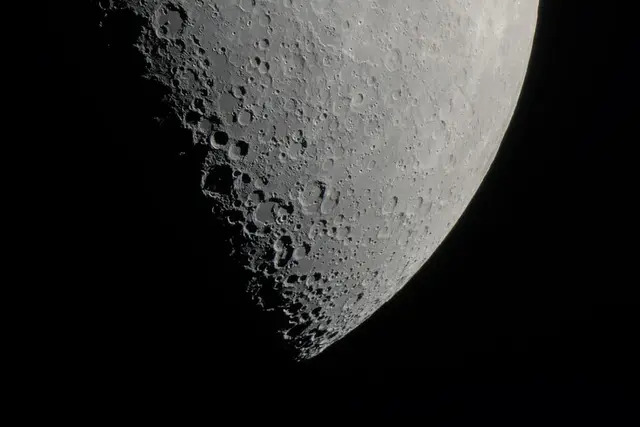
The moon comes first. Under a full moon the Milky Way disappears, and at least one La Palma company does not even schedule sessions around those nights. Check the phase before you book:
Tonight—— illuminated
Upcoming new moons
The best nights for stargazing are the five days either side of the new moon.
| Jan | Feb | Mar | Apr | May | Jun | Jul | Aug | Sep | Oct | Nov | Dec | |
|---|---|---|---|---|---|---|---|---|---|---|---|---|
| Milky Way core | no | no | no | likely | ideal | ideal | ideal | ideal | likely | likely | no | no |
| Daytime visits to Roque de los Muchachos | no | no | no | likely | likely | likely | likely | likely | likely | likely | likely | no |
| Most stable atmosphere (inversion) | likely | likely | likely | ideal | ideal | ideal | ideal | ideal | ideal | likely | likely | likely |
unlikelylikelyideal
The core of the Milky Way is visible from April to October, best from May to August, which are also the months with the most stable atmosphere. In winter the sky is still good, but it is much colder up high and that is when the storms come through. The best-known meteor showers are the Perseids, around 12–13 August (it ties in with the Canary Islands in August), and the Geminids, around 13–14 December (the Canary Islands in December); there are also the Quadrantids in early January and the Eta Aquariids in early May. How well you see them depends on the moon each year.
Pick-up times also change with the seasons, because tours start at sunset. In the south of Tenerife the sun sets at around 18:15 in mid-November and after 21:00 in June:
| Month | Sunrise | Sunset | Daylight hours |
|---|---|---|---|
| January | 07:57 | 18:29 | 10 h 32 min |
| February | 07:42 | 18:54 | 11 h 12 min |
| March | 07:14 | 19:12 | 11 h 58 min |
| April | 07:39 | 20:29 | 12 h 50 min |
| May | 07:14 | 20:47 | 13 h 33 min |
| June | 07:06 | 21:02 | 13 h 56 min |
| July | 07:16 | 21:03 | 13 h 46 min |
| August | 07:33 | 20:43 | 13 h 10 min |
| September | 07:48 | 20:09 | 12 h 20 min |
| October | 08:04 | 19:35 | 11 h 31 min |
| November | 07:25 | 18:11 | 10 h 45 min |
| December | 07:48 | 18:09 | 10 h 22 min |
Canary Islands local time (one hour behind mainland Spain), calculated for the centre of the archipelago in the middle of each month.
Cold on the summits: what to bring
At Izaña (2,369 m) the January average is 7.5 °C by day and 1.1 °C at night, with about 12 days of frost that month, and it can snow from December to March. The La Palma summits also drop below freezing in winter. Even in summer, at 2,000 m at night you need warm clothes.
- Clothes: fleece, jacket, hat and gloves in winter; long trousers and closed shoes all year. Volcano Teide requires long sleeves and long trousers on its sunset tour, and the Roque domes stay cold even by day.
- Red torch: white light ruins your night vision for a good while; your eyes take 15–30 minutes to adjust to the dark.
- Health: at around 2,400 m the companies advise against the visit for people with anaemia or heart or breathing problems, and for babies. There is no medical service at the top.
- Calima: summer Saharan dust is thicker at altitude and can spoil the night. Keep an eye on the forecast.
Stargazing tours: formats and prices
| Format | Where | Price | Duration |
|---|---|---|---|
| Daytime observatory visit | Izaña (Tenerife), Roque de los Muchachos (La Palma) | €21 / €20 | 1.5–2 h |
| Telescope at a viewpoint, own car | La Palma; Teide cable car base | from €30–35 | 1–2 h |
| Group sunset and stars | Teide, Gran Canaria, Fuerteventura | from €35–45 | 3–6 h |
| Sunset, dinner and stars | Teide | from €55–89 | 3.5–9 h |
| Sunset cable car and telescopes | Teide, 3,555 m | €159 | 8 h |
| Walk without a telescope | Los Cancajos, La Palma | €3 (€5 in July and August) | 1 h |
On Volcano Teide's combined tours, if the weather cancels one part you are only refunded for that part: read the conditions before booking.
Our pick
1
Teide, the best value night
Sunset and telescope stargazing in the national park, from €35.
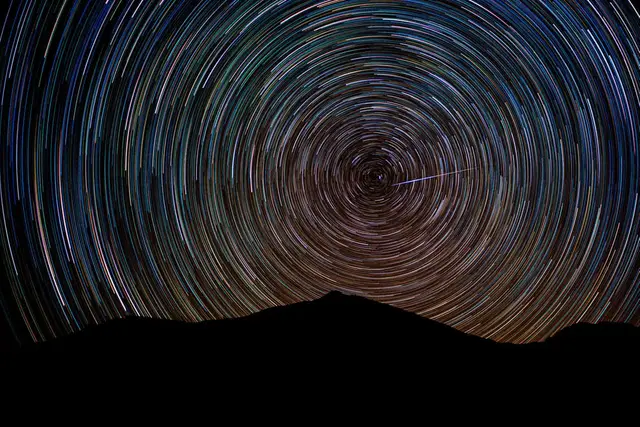
GetYourGuide3 - 5 hours
Tenerife: Sunset and Stargazing at Teide National Park
4.7 (3,665 reviews)
from €35Check availability
2
Teide with dinner
For a full night out: sunset, dinner and guided stargazing in about nine hours.
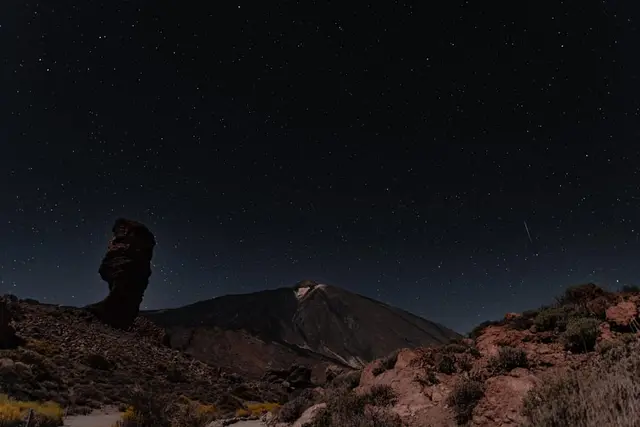
GetYourGuide9 hours
Teide: Guided Sunset & Stargazing Tour by Night with Dinner
4.7 (1,541 reviews)
from €89Check availability
3
La Palma with a telescope
Two hours of guided stargazing on the island of the stars, from €39.
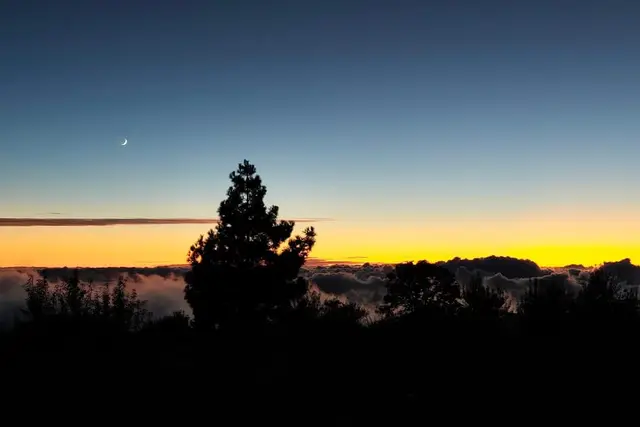
GetYourGuide2 hours
Experience a stargazing tour with a telescope in La Palma
4.4 (43 reviews)
from €39Check availability
4
Fuerteventura, a mild night
Calderón Hondo volcano at sunset and the stars without the cold of the high mountains.
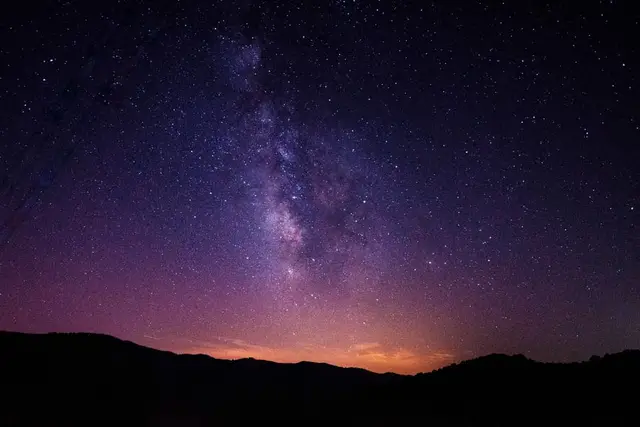
GetYourGuide3 hours
Fuerteventura: Guided Stargazing Calderón Hondo Volcano Tour
4.8 (1,025 reviews)
from €45Check availability
5
Gran Canaria
Sunset and stars with a guide; you can choose hotel pick-up or make your own way.
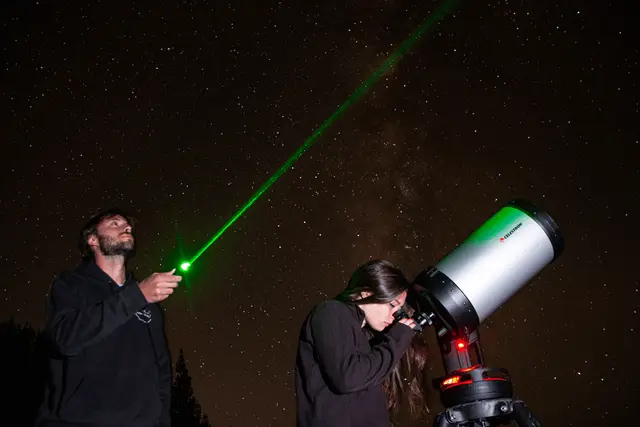
GetYourGuide3 - 6 hours
Gran Canaria: Sunset & Stargazing Tour: Pick-up or Self-Drive
4.8 (298 reviews)
from €45Check availability
GetYourGuide3 - 5 hours
Tenerife: Sunset and Stargazing at Teide National Park
4.7 (3,665 reviews)
from €35Check availability
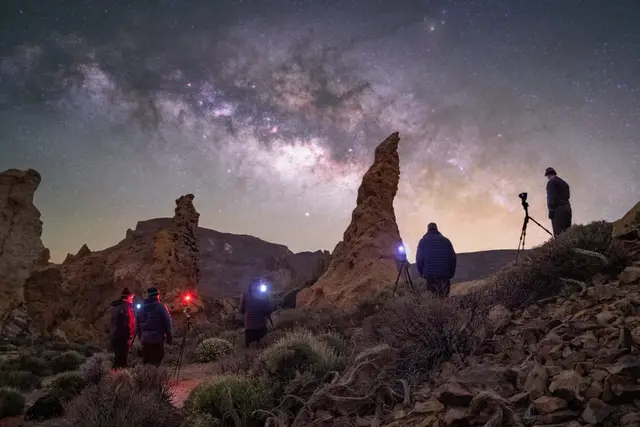
GetYourGuide3 - 6.5 hours
Tenerife: Teide National Park Sunset & Stargazing Tour
4.2 (4,620 reviews)
from €40Check availability
GetYourGuide3.5 - 8 hours
Teide National Park – Dinner, Sunset & Stargazing Experience
4.5 (2,518 reviews)
from €55Check availability
GetYourGuide9 hours
Teide: Guided Sunset & Stargazing Tour by Night with Dinner
4.7 (1,541 reviews)
from €89Check availability
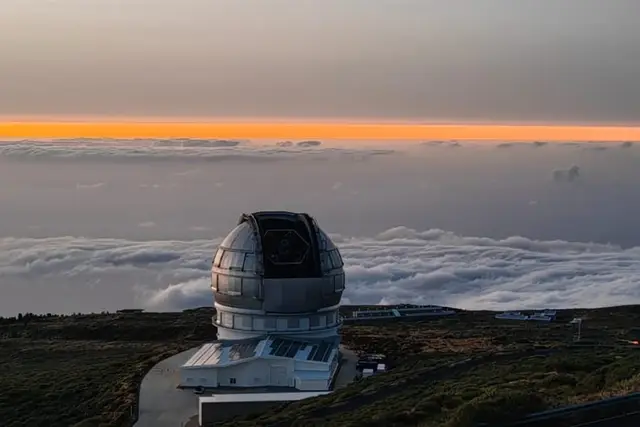
GetYourGuide6 - 7 hours
La Palma: Roque de los Muchachos Stargazing Tour with Wine
4.4 (708 reviews)
from €55Check availability
GetYourGuide1.5 hours
La Palma: Premium Stargazing Tour for 10
4.2 (65 reviews)
from €75Check availability
See all options on GetYourGuide →Prices checked on 2 October 2026
Frequently asked questions
Where is the best stargazing in the Canary Islands?
On La Palma, with 16 astronomical viewpoints and the Roque de los Muchachos, and in Teide National Park. Fuerteventura, which is a Starlight Reserve in its entirety, is the option without the mountain cold.
Can you visit the Roque de los Muchachos observatory at night?
No. Visits are by day only, with a Starlight guide, for €20; at night access is for staff only. Night tours take place at viewpoints with portable telescopes.
How much does a stargazing tour on Teide cost?
From €35 for stargazing without transfer and from €35–40 for sunset tours on the booking platforms. With dinner, from €55, and the one that takes the cable car up at sunset, €159.
What is the best time for stargazing in the Canary Islands?
Any night away from the full moon. For the Milky Way core, May to August; the Perseids around 12–13 August and the Geminids around 13–14 December. Daytime visits to the Roque de los Muchachos are suspended from December to March.
Is it cold on Teide at night?
Yes. In winter it drops below freezing and there may be snow or ice; in summer you still need warm clothes, long trousers and closed shoes.
Can children go stargazing?
Yes, with limits: the Teide observatory and Volcano Teide's night tours do not admit children under 8, and the Roque de los Muchachos visit has a minimum age of 6. On La Palma there are sessions with a child rate from €18.