The best diving in the Canary Islands is on El Hierro. La Restinga has been a marine reserve since 1996, the tourist office speaks of up to 50 m visibility, and its water is the warmest in the archipelago all year round. The catch is getting there: 2 h 20 by ferry from Los Cristianos or an inter-island flight. For scuba diving in the Canary Islands without the hassle, Tenerife has more centres, wrecks and shore entries. Lanzarote offers the Museo Atlántico and angel sharks almost daily in winter, and Gran Canaria has El Cabrón, a dive from the beach. Fuerteventura, which has the highest proportion of visitors who dive (3 %), is mainly about snorkelling at Lobos.
The best Canary Island for diving
Where to dive and snorkel
La Restinga, El Bajón, Baja Bocarones
Marine reserve, up to 50 m visibility and the warmest water; try dive from €65.
El Puertito, Radazul, Tabaiba, Las Galletas
The most centres, two wrecks and shore entries; try dives from €70 to €120.
Playa Chica, Museo Atlántico, La Graciosa
Angel sharks in winter, sculptures at 12–14 m and a 70,439 ha marine reserve.
El Cabrón (Arinaga), Puerto de Mogán
A shore dive to 19–22 m with big shoals of fish.
Lobos, Corralejo
Snorkelling in the rock pools at El Puertito de Lobos; try dives with the island's centres.
South-west marine reserve
3,455 ha protected off the west coast.
Playa de Santiago, La Cueva
Boat dives and try dives from the beach for children from age 8.
El Hierro: La Restinga and the Mar de las Calmas
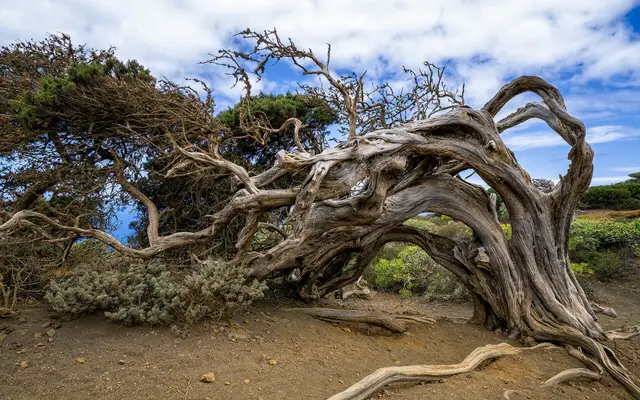
The Punta de La Restinga–Mar de las Calmas marine reserve, created in 1996, is the reason to pack your kit for El Hierro. The tourist office counts more than ten dive sites: El Bajón, an underwater pinnacle and the star dive; Baja Bocarones, a wall; Punta Restinga, a tongue of lava; and La Restinga harbour for night dives. You see turtles, tuna, rays, groupers and barracuda, and once in a while a whale shark.
Off La Restinga lies the underwater volcano from the 2011–2012 eruption (Tagoro), whose summit is about 88 m below the surface: you cannot dive it, but it explains the seascape. The Mar de las Calmas marine national park is still only a proposal, not a declared park.
Direct prices: a try dive costs €65 from the shore and €85 from a boat at Buceo La Restinga, and from €75 at Buceo El Hierro, taking about 2 h 30 in all. The centres are compared in our review of diving at La Restinga. La Restinga is 41 km and 52 minutes from the airport; a taxi costs about €48–52.
Tenerife: more centres, wrecks and turtles (no promises)
Tenerife is the easiest island for a first try dive. There are dives for every level:
| Site | Area | Depth | Access | Level |
|---|---|---|---|---|
| El Puertito (Armeñime) | Adeje | average 6 m, max. 15 m | shore or boat | beginner |
| Montaña Amarilla | Las Galletas | average 15 m, max. 25 m | shore or boat | easy |
| Los Chuchos | Las Galletas | 15–22 m | boat | Open Water |
| El Condesito wreck | Punta Rasca | about 20 m | boat | currents possible |
| Radazul Bay | Radazul | 20 m | shore | night diving |
| El Peñón wreck | Tabaiba | max. 32 m | shore | advanced |
| Cueva de los Cerebros | Playa San Juan | 18 m | boat | high |
At two southern centres with published rates, a try dive costs between €70 and €120, a guided dive for certified divers €40–60 and the Open Water course €435–500. The shore entries at Radazul, Tabaiba and Abades, on the east coast, are the alternative when the sea in the south-west is rough.
Turtles. Tenerife's green turtles are juveniles that come to feed, and seeing them is not guaranteed: one excursion seller reckons they turn up on one trip in three. The famous group at El Puertito formed because people fed them, which is illegal, and the cove is now surrounded by construction work for a holiday complex and has had swimming closures because of bacteria. If anyone offers to let you feed turtles or rays, find another boat.
Angel sharks. Las Teresitas beach, in Santa Cruz, an urban beach made with imported sand, is the first confirmed nursery area for the angel shark (Squatina squatina, critically endangered) and the largest known. On Tenerife they are seen mainly from December to February.
Lanzarote and La Graciosa: Museo Atlántico, Playa Chica and the largest reserve
Playa Chica, in Puerto del Carmen, is the hub for shore diving on Lanzarote. Dive centres say angel sharks are seen almost daily from November to March; the main season for adults on the island runs from December to April.
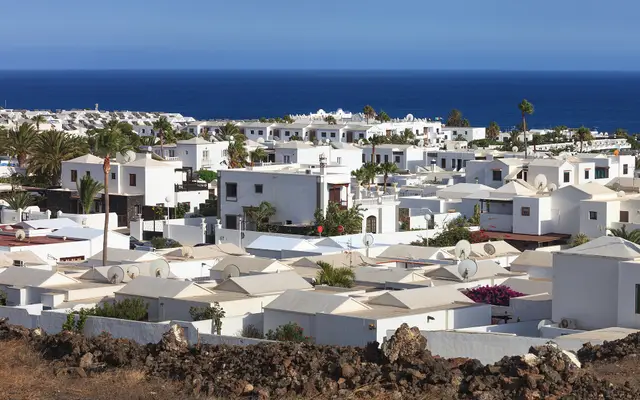
The Museo Atlántico is more than 300 sculptures by Jason deCaires Taylor at 12–14 m deep, about 300 m off Las Coloradas (Playa Blanca), and you can only visit by diving with a licensed centre. It no longer appears on the website of the island council's tourist centres: dive centres sell it, from €48 for certified divers and €149 for the full beginners' programme (pool, shore dive and boat dive to 12 m maximum, about 5 hours). For jet skis and other water sports on the island, see our guide to Lanzarote on the water.
To the north, the Reserva Marina de La Graciosa e islotes del norte de Lanzarote has protected 70,439 ha since 1995, according to Spain's ministry; it is often described as the largest in the European Union, although the ministry does not claim that. Around Roque del Este there is a one-mile no-entry zone (reserva integral) that you cannot go into.
Gran Canaria, Fuerteventura, La Palma and La Gomera
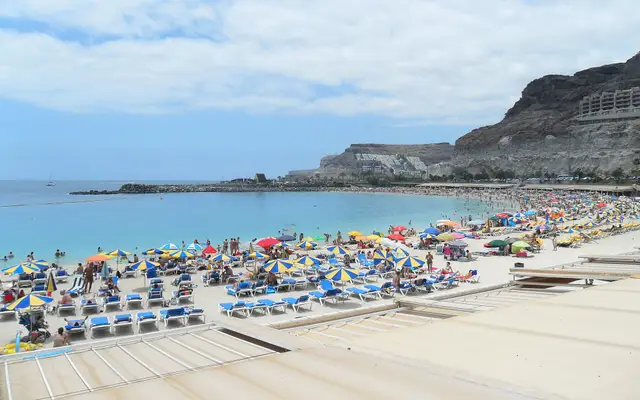
Gran Canaria. El Cabrón, at Arinaga (Agüimes), is a shore dive with an average depth of 19 m and a maximum of 22 m, intermediate level, with big shoals of grunts, groupers, moray eels and barracuda. Entering from the beach means you do not pay for a boat. It is not a marine reserve, though many centres advertise it as one: it is a Natura 2000 special area of conservation (ZEC) proposed as a future reserve (official page). Off Puerto de Mogán is the La Atlántida artificial reef, which the yellow submarine also visits for non-divers. Prices and companies in water sports on Gran Canaria.
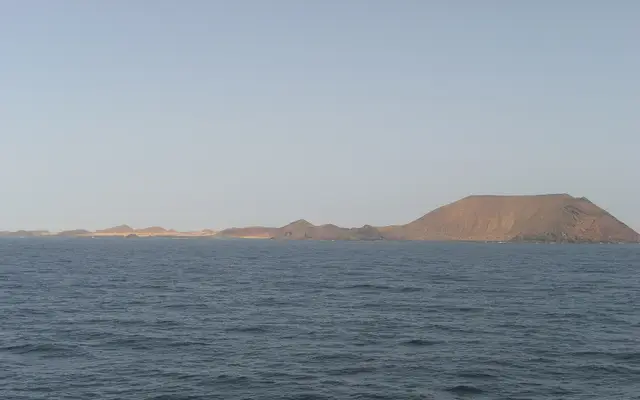
Fuerteventura. It shares with Lanzarote the coldest winter water (18.3 °C in March at Corralejo) and is the island with the highest proportion of visitors who dive. For snorkelling, the natural rock pools at El Puertito, on the island of Lobos, 10 minutes from the quay; remember that landing requires the free island council permit from lobospass.com, in 4-hour shifts and opening 5 days ahead. Naviera Nortour sells boat plus snorkelling from €27.
La Palma. The La Palma marine reserve has protected 3,455 ha of the south-west, between Caleta de los Pájaros and Punta Gruesa, since 2001.
La Gomera. There are boat dives near Playa de Santiago and try dives from the shore for children from age 8 at La Cueva and San Sebastián beaches.
- 1La RestingaportDirections ↗
- 2RadazulportDirections ↗
- 3AbadesbeachDirections ↗
- 4Las TeresitasbeachDirections ↗
- 5Puerto del CarmentownDirections ↗
- 6Museo AtlánticosightDirections ↗
- 7Caleta de Sebo (La Graciosa)portDirections ↗
- 8El Cabrón (Arinaga)nature areaDirections ↗
- 9Puerto de MogánportDirections ↗
- 10Isla de Lobosnature areaDirections ↗
Water temperature and diving season: angel sharks in winter
The sea around the Canaries is cooler than the brochure suggests: a cold current flows past the islands and the water peaks in September and October, not August. The western islands run about a degree warmer than the eastern ones all year.
| Island (spot) | Feb | Mar | May | Aug | Sep | Nov |
|---|---|---|---|---|---|---|
| El Hierro (La Restinga) | 19.8 | 19.6 | 20.9 | 23.4 | 24.1 | 22.9 |
| La Palma (Santa Cruz) | 19.5 | 19.3 | 20.6 | 23.2 | 24.0 | 22.7 |
| La Gomera (San Sebastián) | 19.6 | 19.4 | 20.6 | 23.2 | 23.9 | 22.7 |
| Tenerife (Los Cristianos) | 19.4 | 19.2 | 20.4 | 23.1 | 23.8 | 22.6 |
| Gran Canaria (Maspalomas) | 19.0 | 18.8 | 20.3 | 22.8 | 23.3 | 22.2 |
| Fuerteventura (Corralejo) | 18.4 | 18.3 | 19.9 | 22.5 | 23.1 | 21.6 |
| Lanzarote (Puerto del Carmen) | 18.3 | 18.3 | 19.8 | 22.4 | 23.0 | 21.6 |
Average sea-surface temperature, in °C. Centres provide wetsuits all year.
| Jan | Feb | Mar | Apr | May | Jun | Jul | Aug | Sep | Oct | Nov | Dec | |
|---|---|---|---|---|---|---|---|---|---|---|---|---|
| Warmest water | likely | unlikely | unlikely | unlikely | unlikely | likely | likely | ideal | ideal | ideal | likely | likely |
| Angel sharks | ideal | ideal | likely | likely | unlikely | unlikely | unlikely | unlikely | unlikely | unlikely | likely | ideal |
unlikelylikelyideal
The two seasons run in opposite directions: dive centres see the most angel sharks from December to February on Tenerife and until April on Lanzarote, just when the water is coldest. If you want warm water, go in September; if you want angel sharks, between December and March.
Try dives: prices, ages and what the law requires
Recreational diving in the Canary Islands is governed by Royal Decree 550/2020 (Real Decreto 550/2020):
- Minimum age: 8. From 8 to 9, 6 m maximum; from 10 to 11, 12 m; from 12 to 15, 21 m; from 16, 40 m. PADI applies its own ages by programme: its Bubblemaker is from age 8 in less than 2 m of water.
- One instructor per student on try dives. A group try dive with a single instructor is illegal, however cheap it is.
- Compulsory insurance for accidents and third-party liability: at one Tenerife centre, €9 a day if your own policy does not cover diving.
- Medical questionnaire, signed; if you answer "yes" to any question, you need a medical certificate.
| Island | Try dive (direct price) |
|---|---|
| El Hierro | €65 shore / €85 boat; from €75 at another centre |
| Tenerife | €70–120 depending on centre |
| Lanzarote | €149 for the programme with Museo Atlántico |
Our pick
1
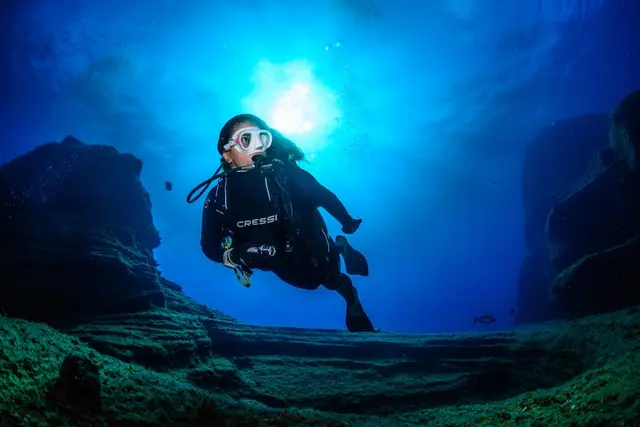
Try dive at La Restinga
The best sea in the Canaries for a first time; starts at the same price as a local centre's shore try dive.
2
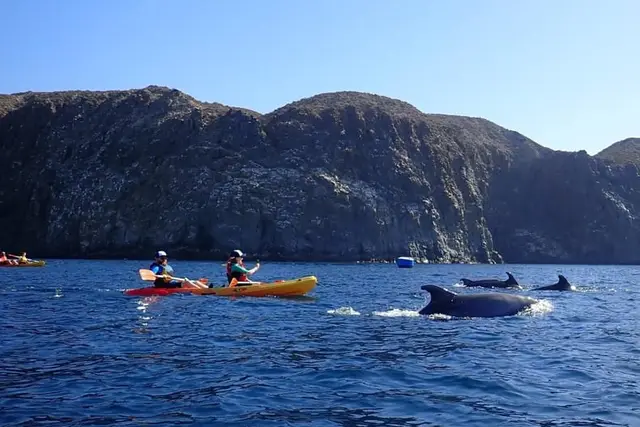
Kayak and snorkel on Tenerife
The cheapest way to peek at the seabed, no diving skills needed; turtles, with no promises.
GetYourGuide3 hours
Tenerife Kayak & Snorkelling Safari with Wildlife and Snacks
4.8 (913 reviews)
from €22.50Check availability
3
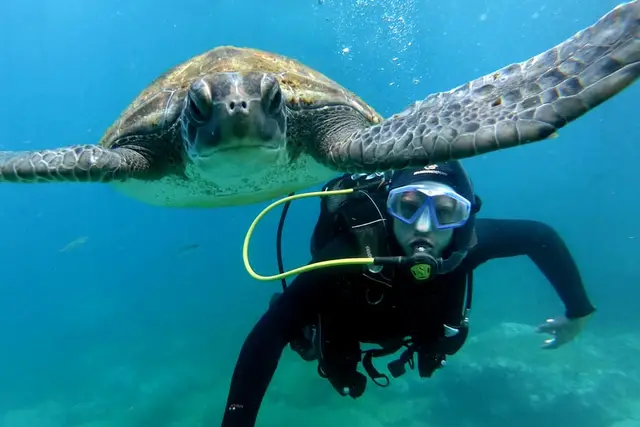
Diving and snorkelling in a turtle area
For groups where one person dives and another prefers to stay on the surface; turtles are not guaranteed.
GetYourGuide3 hours
Tenerife: 2-in-1 Scuba Diving & Snorkelling in Turtle Habitat
4.7 (1,996 reviews)
from €75Check availability
4
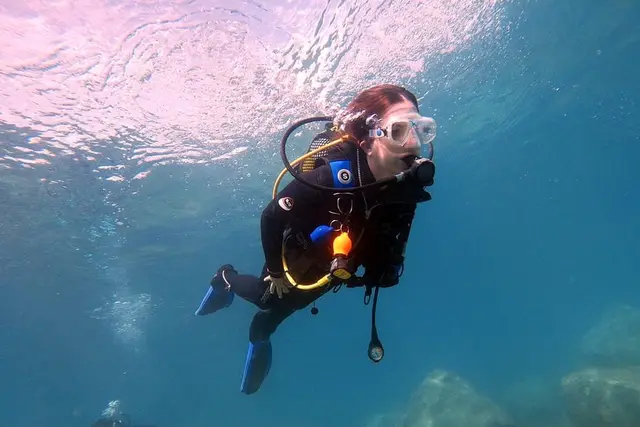
Try dive on Gran Canaria
For anyone staying in the south of Gran Canaria who wants a guided first taste.
GetYourGuide3 hours
Gran Canaria: Try Scuba Diving for Beginners
4.8 (497 reviews)
from €89Check availability
5
Intro dive on Fuerteventura
2.5 hours to get started on the island with the most diving enthusiasts.
GetYourGuide2.5 hours
Fuerteventura: Introduction to Scuba Diving
4.9 (387 reviews)
from €85Check availability
GetYourGuide3 hours
Tenerife: 2-in-1 Scuba Diving & Snorkelling in Turtle Habitat
4.7 (1,996 reviews)
from €75Check availability
GetYourGuide3 hours
Gran Canaria: Try Scuba Diving for Beginners
4.8 (497 reviews)
from €89Check availability
GetYourGuide2.5 hours
Fuerteventura: Introduction to Scuba Diving
4.9 (387 reviews)
from €85Check availability
GetYourGuide3 hours
Fuerteventura: First Scuba Experience – Calm 1:1 Dive
5.0 (75 reviews)
from €105Check availability
GetYourGuide4 hours
La Palma: First snorkelling, then an introduction to scuba diving – Discover the Atlantic
5.0 (4 reviews)
from €99Check availability
See all options on GetYourGuide →Prices checked on 2 October 2026
Snorkelling in the Canary Islands from the shore
To snorkel on your own, try Tenerife's sheltered coves: El Puertito de Adeje (go early, before the boats), Palm-Mar, Abades, Alcalá and Radazul Bay. On Lobos, the rock pools at El Puertito. On El Hierro, Tamaduste has calm water all year, while the La Maceta and Charco Azul pools have no lifeguard and are best at low or mid tide.
With a guide, the usual options are kayak and snorkel trips from Los Cristianos or Los Gigantes (€36–45 direct) and the catamarans to Papagayo from Puerto Calero, which include snorkelling.
What is illegal underwater
- Swimming or diving with wild whales and dolphins. The Canary rules ban swimming within 500 m of them and the Spanish rules ban entering the 60 m zone. If one approaches you while diving, do not interact and move away. More in whale and dolphin watching.
- Touching, chasing or feeding turtles and other protected species: fines for serious offences reach €200,000. In marine protected areas it is also forbidden to feed any animal or to anchor over seagrass meadows.
- Taking rhodoliths from "Popcorn Beach" (Playa del Bajo de la Burra, Fuerteventura): it is prohibited and signposted.
- Entering the no-entry zones, such as the circle around Roque del Este at La Graciosa. In the marine reserves, dive with the local centres.
Which Canary Island is best for diving?
El Hierro, for the La Restinga marine reserve, the visibility (up to 50 m) and the warmest water. Tenerife is best for beginners, thanks to its number of centres and shore entries.
How much does a try dive cost in the Canary Islands?
Between €65 (from the shore at La Restinga) and €120 depending on island and centre. Add the compulsory insurance if it is not included, about €9 a day on Tenerife.
From what age can you dive?
Spanish law allows diving from age 8, no deeper than 6 m up to age 9. Each centre may set higher ages for its programmes.
Can you dive in the Canary Islands in December?
Yes, all year. The water is between 20 and 21.6 °C in December and it is angel shark season on Lanzarote, Gran Canaria and Tenerife; centres provide wetsuits.
Where is the best snorkelling in the Canary Islands?
On Tenerife, El Puertito, Palm-Mar, Abades and Radazul; on Fuerteventura, the rock pools on Lobos; on El Hierro, Tamaduste. At natural pools without a lifeguard, check the sea conditions before going in.
Can you swim with turtles or dolphins in the Canary Islands?
With dolphins and whales, no: it is illegal. You may come across turtles, but you must not touch, chase or feed them, and no trip can guarantee them.